
 Available in US
Content
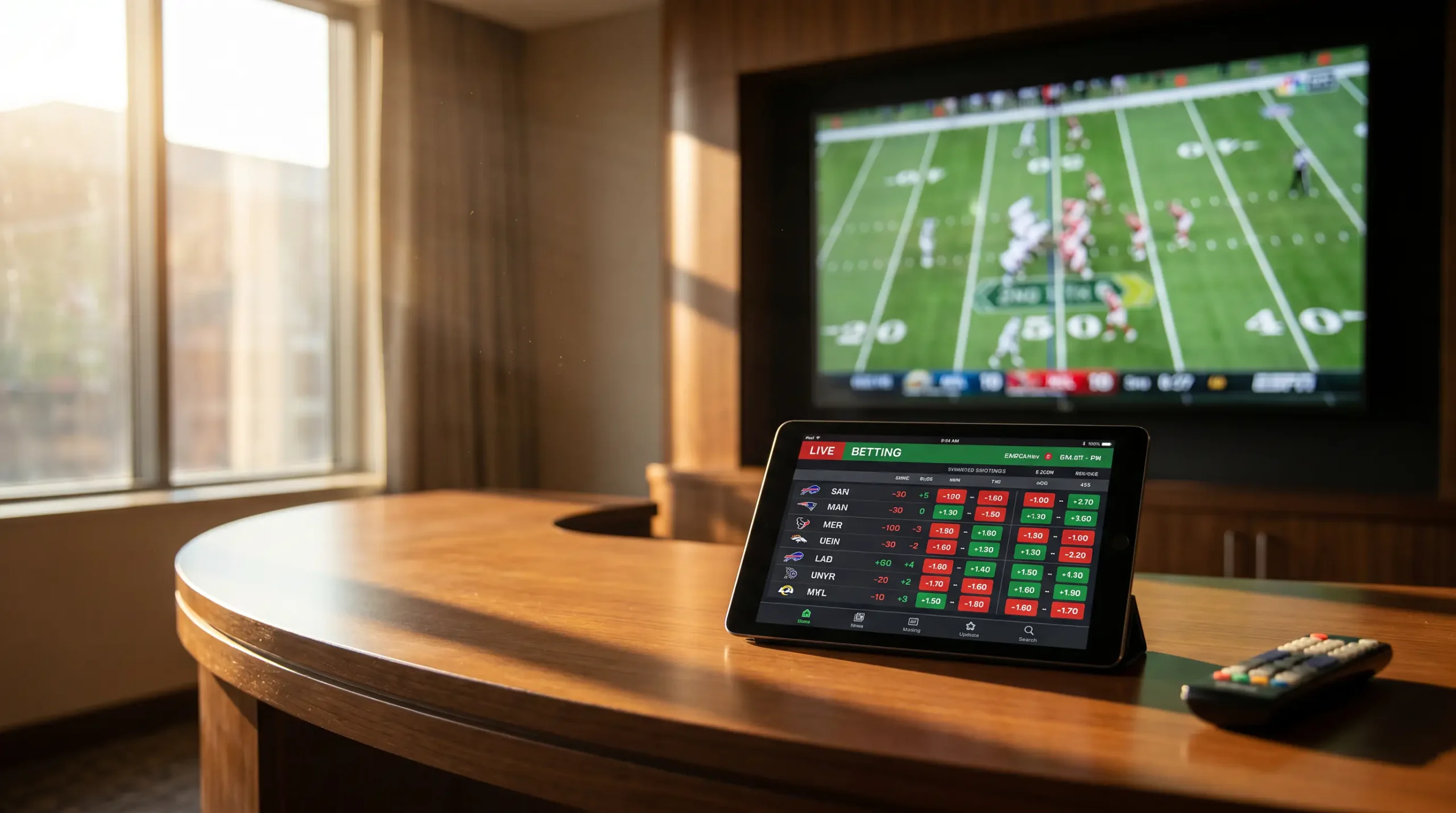
Two Seconds Is a Lot of Money
The closing example a colleague at NFL Sports Betting Stats keeps using is the one that taught me to take in-play seriously: most UK punters arriving at NFL from football are surprised that the totals number is a real bet rather than a sideshow, and that same dynamic extends fivefold to the live market, where second-half totals frequently trade thicker than pre-match prop bets. Translate that into Sunday-night reality and you find a market that moves on every play, sometimes faster than your stream can update.
Live NFL betting from the UK is a different sport from live football. You are betting on an event that runs in 40-second cycles, broken by long timeouts, with adjustable lines on every market and a constant temptation to overreact to the most recent play. The 76% of people aged 18-24 who use mobile phones for betting are placing live wagers from their living rooms, often on the same screen they are streaming the game on, and the gap between what they see and what the bookmaker sees is the single biggest issue in this corner of the market.
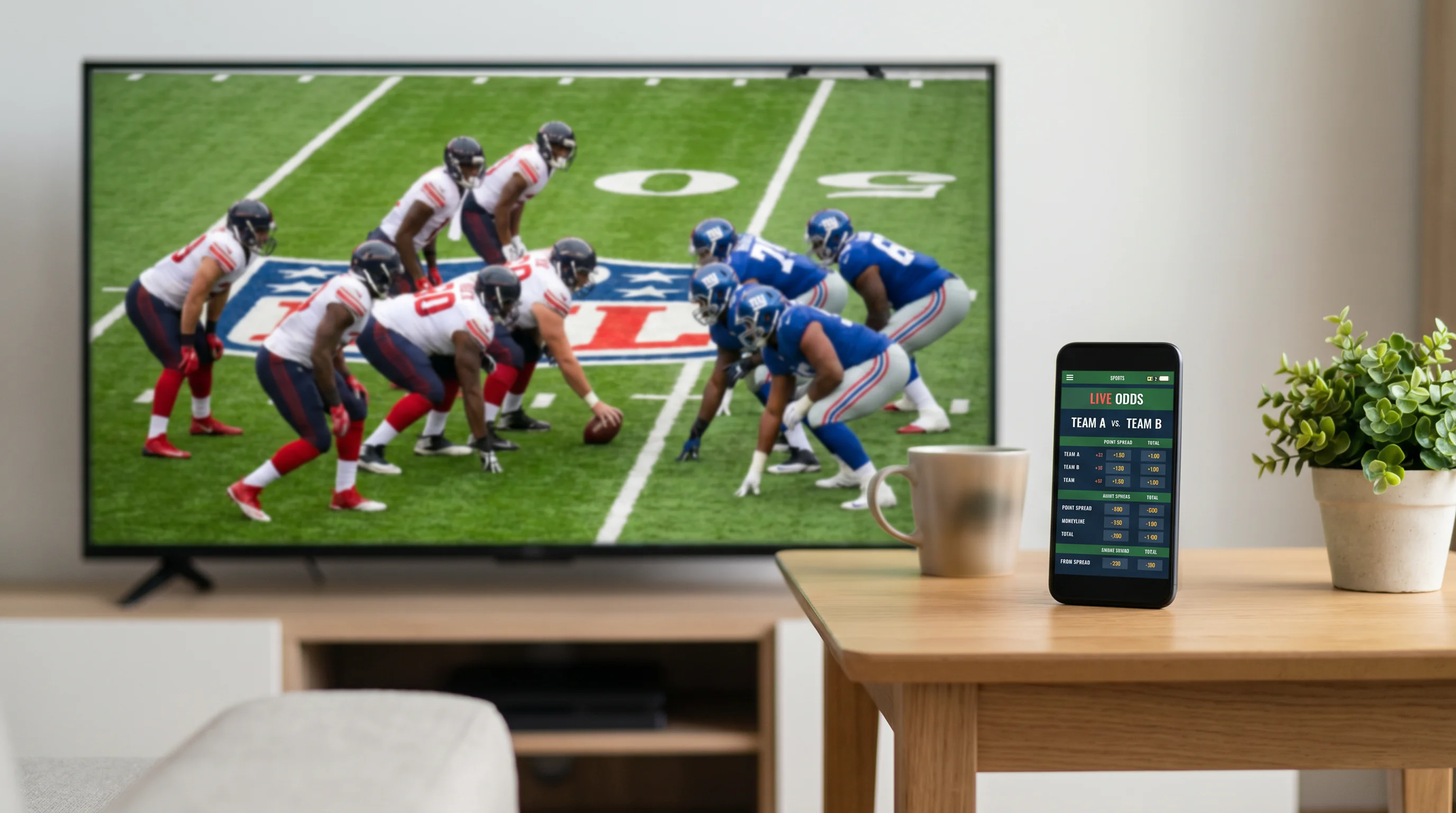
How In-Play Lines Update
Every snap of an NFL game triggers a recalculation at the bookmaker’s pricing engine. Down, distance, yard line, score, time remaining, timeouts – all of it feeds a live win-probability model that drives the moneyline, the spread, and the total. The total recalculates fastest because it depends most directly on play-by-play scoring and clock movement.
Pre-match markets are priced over days. Live markets are priced over seconds. A 40-yard pass completion will swing the spread by half a point and the total by a full point within the eight seconds it takes the line trader to confirm the play. A defensive turnover swings even more – sometimes 2.5 points on the spread on the right side of the field. The market does not wait politely for you to consider whether to bet. The market moves, and you either bet the price you see or you watch it disappear.
The Stream Delay Problem
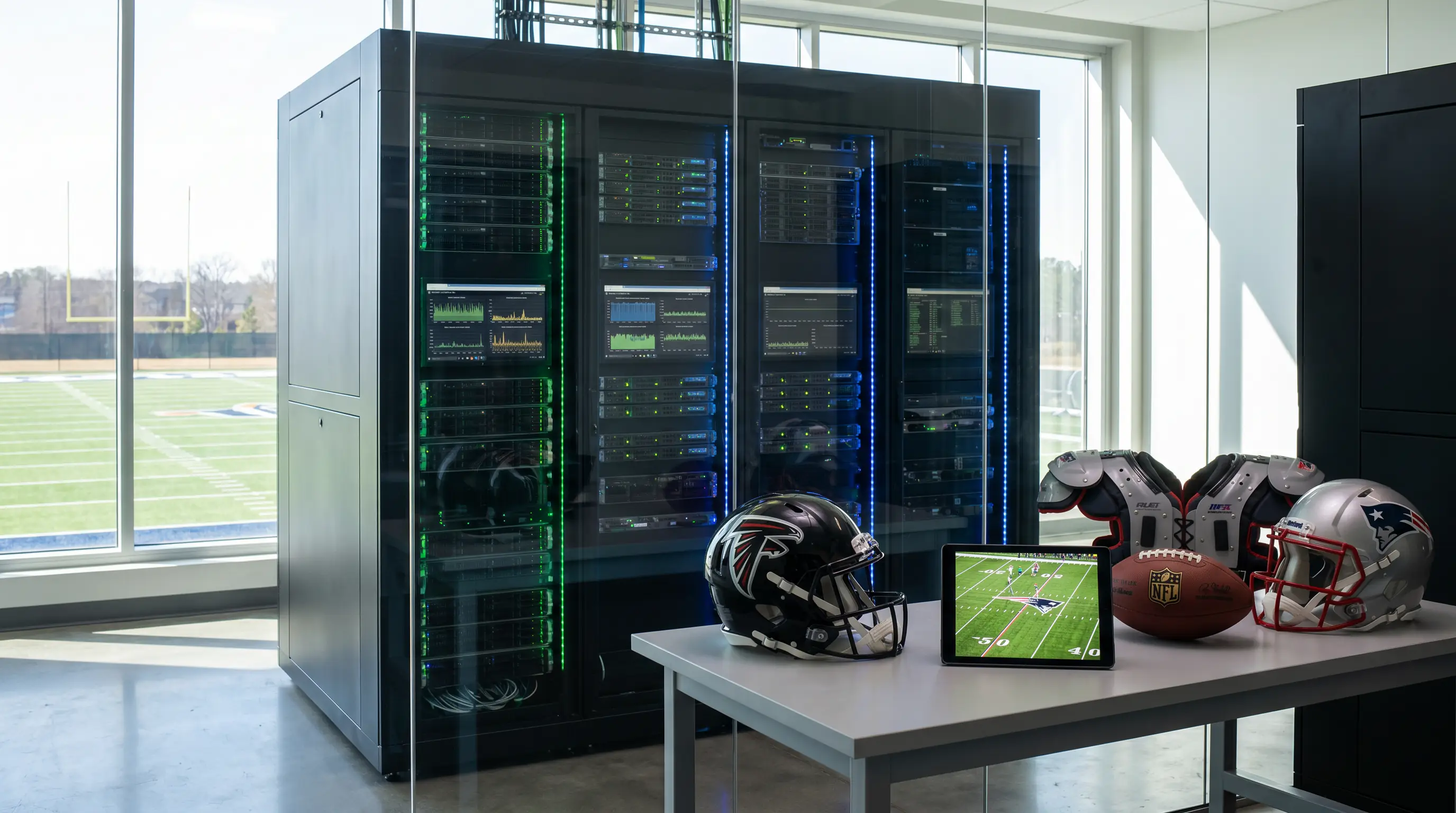
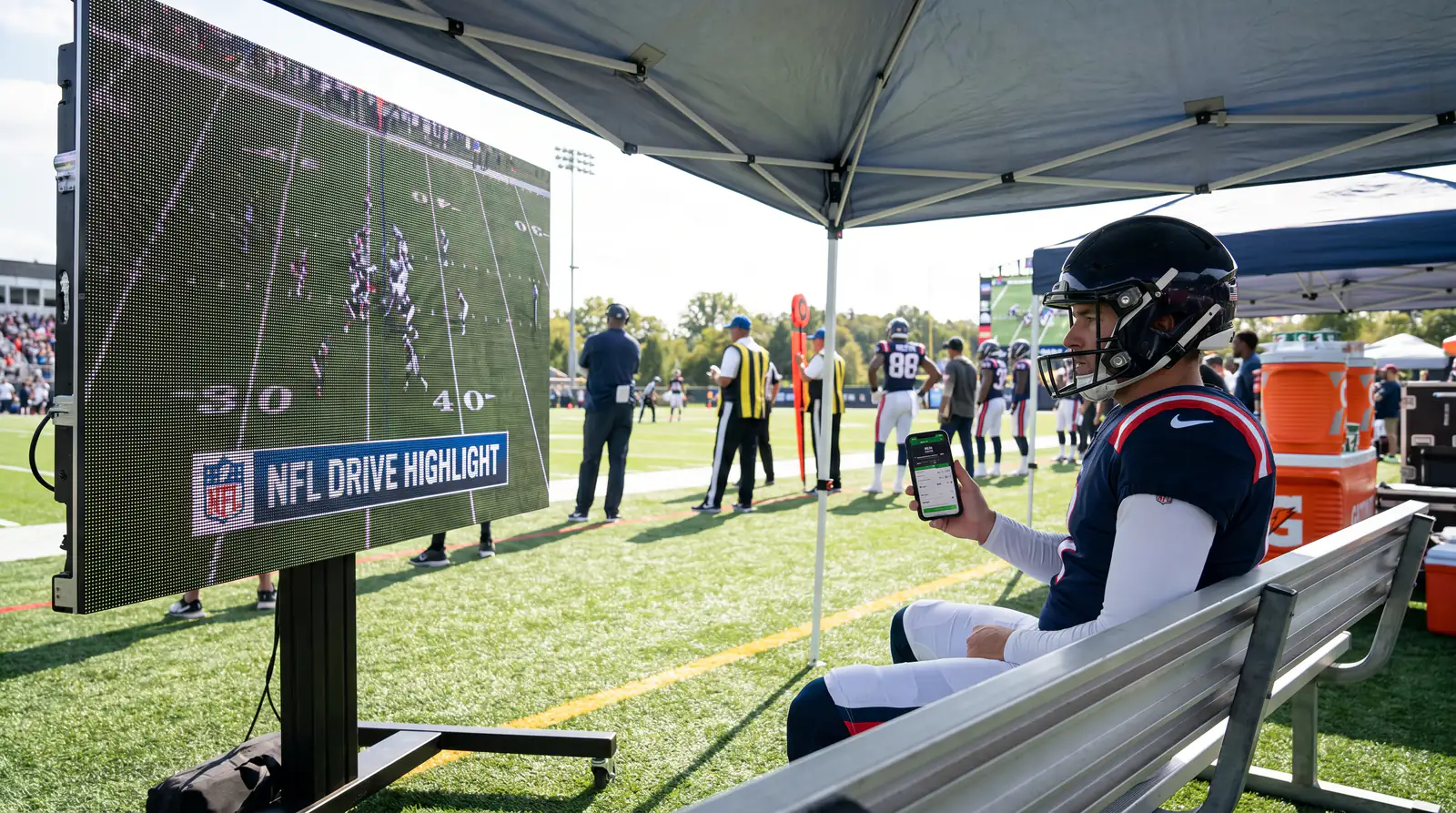
Here is where UK punters lose more money than anywhere else in NFL live betting. The picture on your screen is not happening live. Depending on your provider, it is between 5 and 90 seconds behind the actual play. The bookmaker’s data feed is not.
Sky Sports’ coverage typically runs 5-10 seconds behind real time on a good broadcast and considerably longer when commercial breaks shuffle. ESPN Player can run 30 seconds late. International broadcasts and apps that re-encode the feed can stretch to 60-90 seconds. Meanwhile the bookmaker’s pricing engine takes its data straight from the league’s official feed, which is faster than any consumer stream. The result: a touchdown happens, the bookmaker’s model knows about it eight seconds later, the line moves to reflect it, and twenty seconds after that the play finally appears on your TV.
What does this mean for you? Any bet you place after seeing a big play on screen is, at the bookmaker’s side, a bet on an outcome that has effectively already happened. Some books outright void wagers placed during the suspension window. Others happily take the bet because they know the line has already moved against you. Either way, the punter chasing the play they just watched is being sold a price that no longer reflects current reality.
The lesson is uncomfortable: most successful live NFL betting in the UK happens before the big play, not after. Read the situation, take the price, accept the variance. If you are reacting to what you just saw, you are too late.
Second-Half Lines and Where the Edge Hides
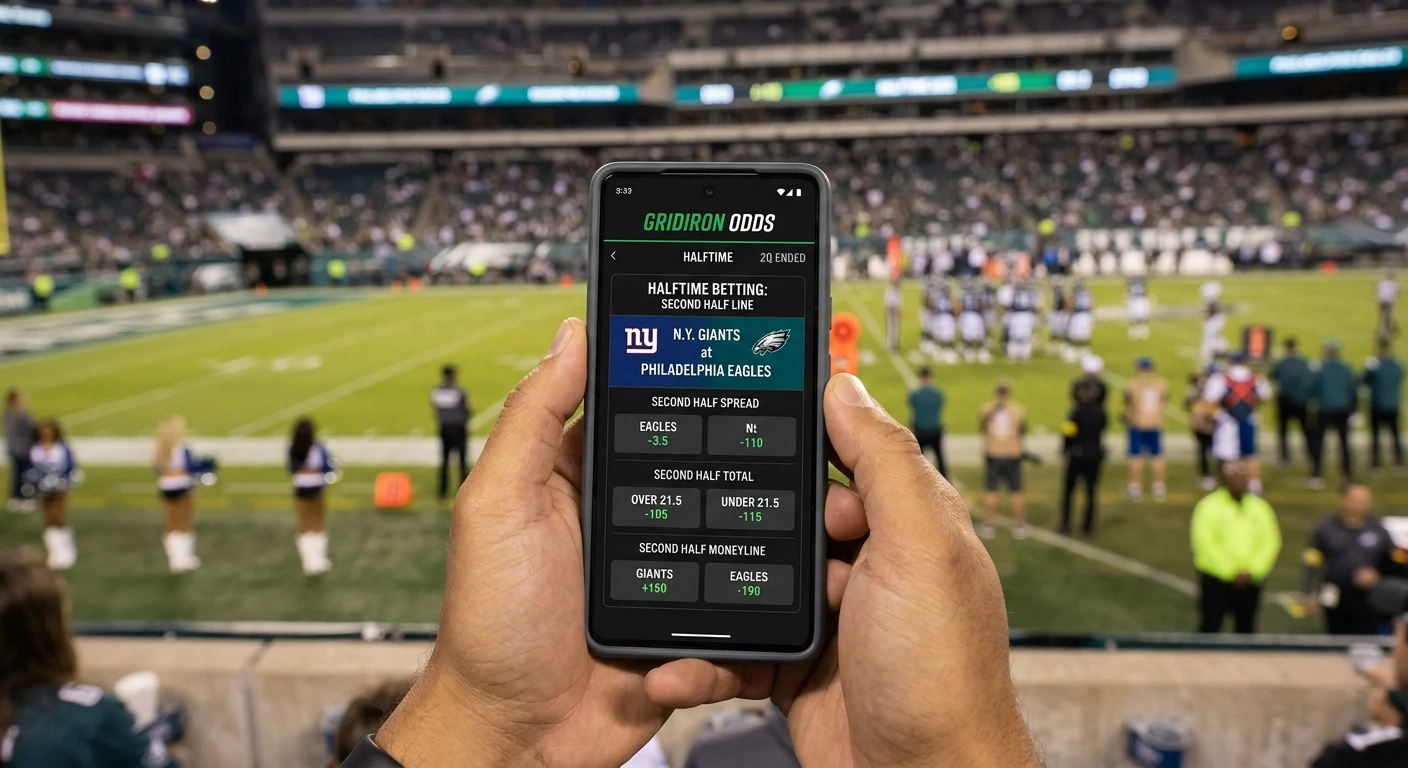
The second-half market is my favourite in-play product. It opens at halftime, hangs around for 12 minutes of advertising and analysis, and prices off the first-half result with what looks like a fresh model but often acts like a momentum reflex. A team that scored 24 in the first half will be priced as if they will score 24 in the second. A team that scored 3 will be priced as if they will score 3.
Both extremes regress. The defensive adjustments at halftime are real. The trailing team will shift script. The leading team will manage clock. The total that looked obviously low at the half often closes high by the end of the third quarter as the market corrects, but the early halftime price is where the edge sits. I shop second-half spreads and totals across two or three books in those 12 minutes more aggressively than I shop pre-match lines all week.
Live Prop Windows
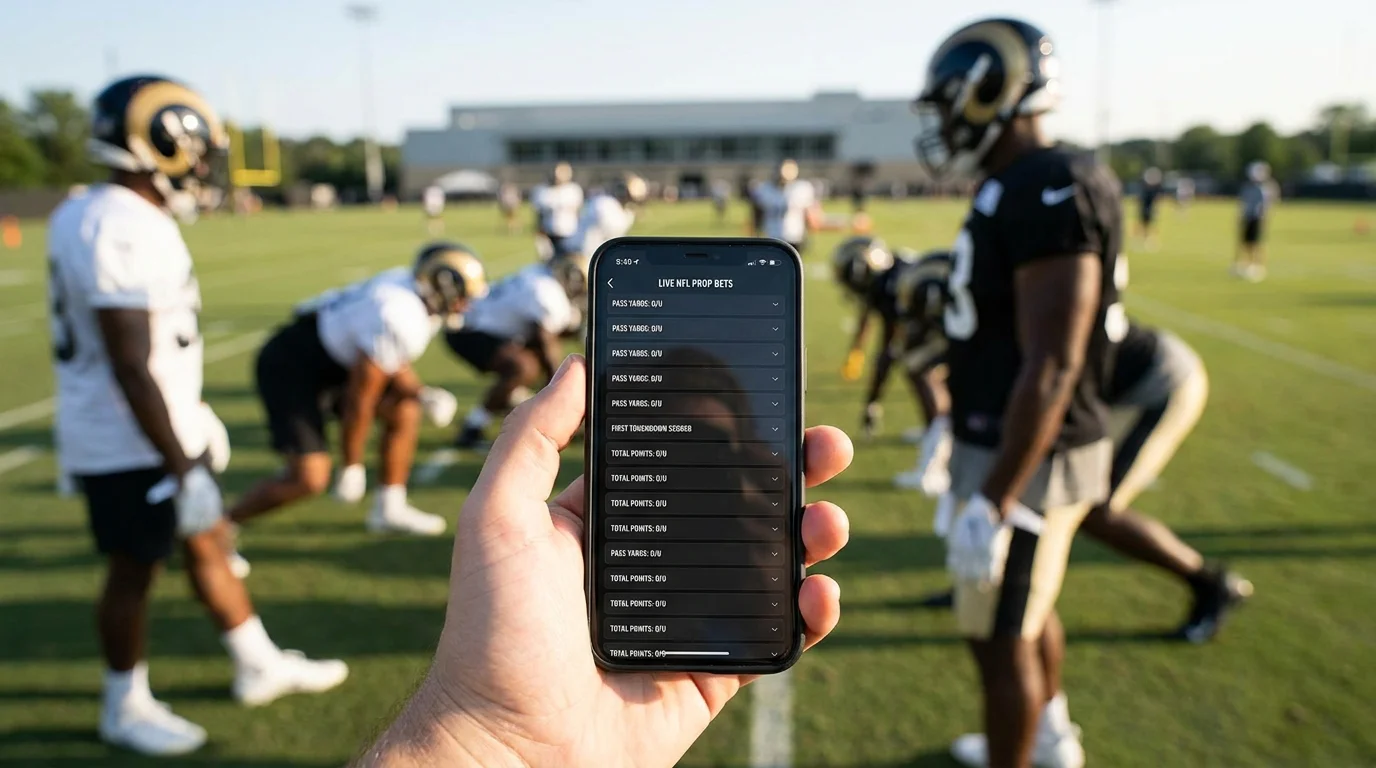
Player prop markets re-open during live windows with surprising regularity. A receiver who started the day at 65.5 receiving yards and has 22 at halftime gets a new live line – often around 38.5 for the rest of the game. If you have a read on usage trends and the script favours that player, the live prop is sometimes priced softer than the pre-match equivalent because the book has fewer hours to model the live line.
The same applies to anytime touchdown scorers. A back who has not scored but has carried twelve times for 70 yards in the first half is priced at, say, 6/4 to score from that point forward. If the script is leaning toward more rushing in the second half, that price is a buy. The market underweights the workload signal in favour of recency. Workload predicts scoring better than recency does, especially in the red zone.
Momentum, Narrative and the Recency Trap
Television commentators love momentum. So do bookmaker price screens. So does your gut after watching three consecutive scoring drives. The data – the closing odds, the play-by-play models, the long-run hit rates – does not love momentum quite as much as the rest of you do.
The most common live mistake I see is the punter who watches a team score touchdowns on three drives, jumps onto the live total over, and then watches both teams punt their way to halftime. The script does not propagate the way the screen suggests. Football regresses harder and faster than basketball. Backing momentum after three live drives is, in my records, a losing strategy across hundreds of bets.
What does work is the opposite – fading hot starts on the total when the underlying numbers do not justify them. A 14-7 first quarter with both touchdowns coming on broken plays is not a 56-point pace. The market may price it that way. The under is often a sober bet at that point, and one that pays out more weeks than the live narrative suggests it should.
Discipline Rules I Wrote on My Wall
Three rules I live by on Sunday nights. First, no live bets in the eight seconds after a big play visible on my stream – by then, the market has already moved without me. Second, no live moneyline bets when the trailing team is favoured. Recovery moneylines look juicy and pay out at long-run rates that do not justify their prices, because the market knows the comeback story better than any individual punter does. Third, all live bets size at half my pre-match unit. Variance is higher, time pressure is higher, the chance of misreading a situation is higher, and the stakes should reflect that.
The script signals I use to read second-half totals overlap heavily with what I track pre-match – the weather, pace and coaching signals I look at on totals apply just as hard once the game is live, only with sharper feedback loops.
How big is the UK stream delay versus the live betting feed?
Typically 5 to 30 seconds on a Sky Sports broadcast and considerably more on re-encoded international apps, sometimes stretching to 60-90 seconds. The bookmaker’s pricing engine works off the league’s official data feed and updates within a couple of seconds of the actual play. That gap is the structural disadvantage every retail in-play punter is fighting.
Why are live totals often softer than pre-match?
The second-half total in particular reflects fewer hours of model time and tends to over-correct toward the first-half pace. Books open the line quickly during halftime advertising windows and let live betting volume sharpen it. The first prices posted at half time are where most of the edge sits, especially when the first-half pace was an outlier in either direction.
