
 Available in US
Content
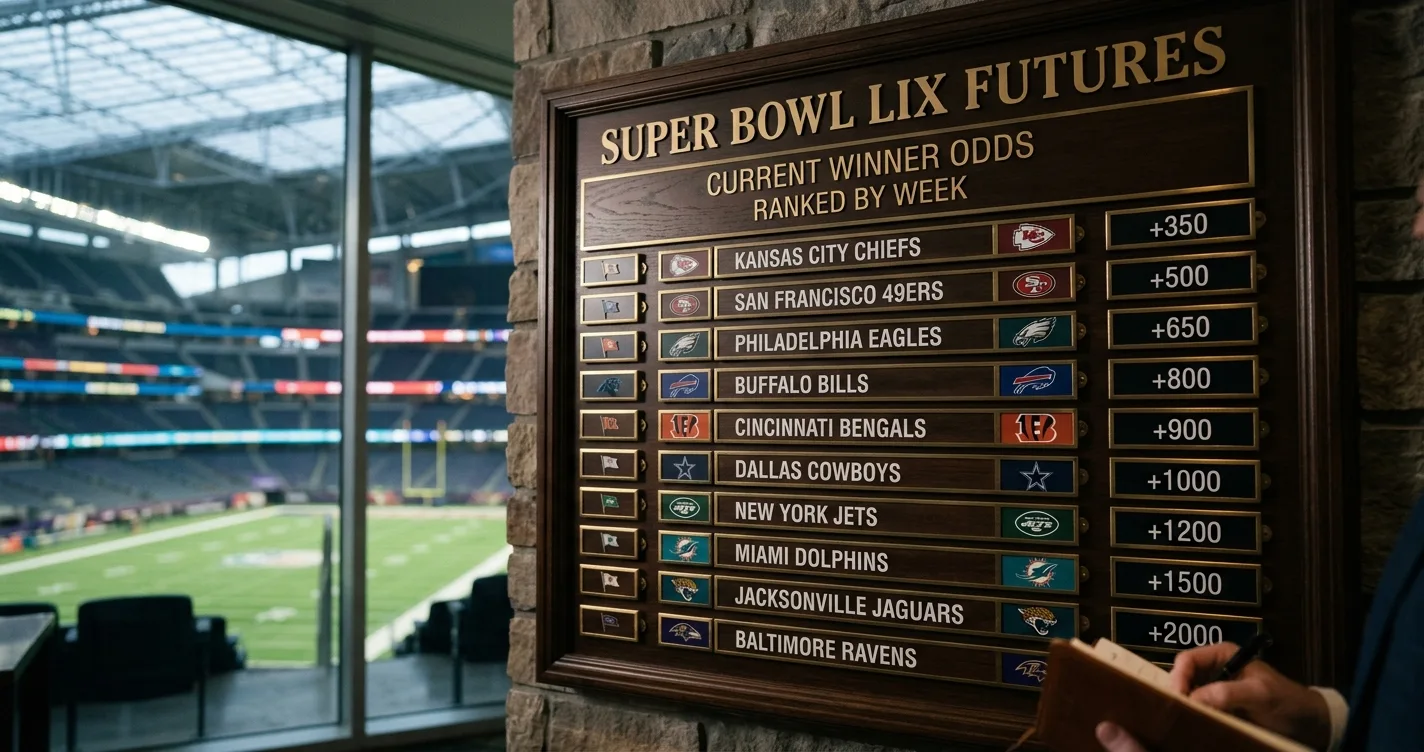
The Bet That Sits in Your Wallet for Six Months
I have one futures slip taped to the inside of my desk drawer. It is from October 2022, a 28/1 ticket on a team that lost in the conference final. Worthless paper. I keep it because it reminds me that a Super Bowl winner future is not a bet you place – it is a bet you live with. For six months you watch your team’s price drift on Wednesday morning markets, your hopes rise on Sunday nights, and your money sit dead in the bookmaker’s pot regardless of what else you might want to back.
The NFL signed an 11-year media rights package worth $111 billion, with an opt-out window in 2029, and the broader expansion of the league’s audience has pulled futures betting along with it. UK punters now have access to deep Super Bowl markets twelve months a year. The product is glossy. The maths underneath it is harsh.
When Markets Open and What That Means
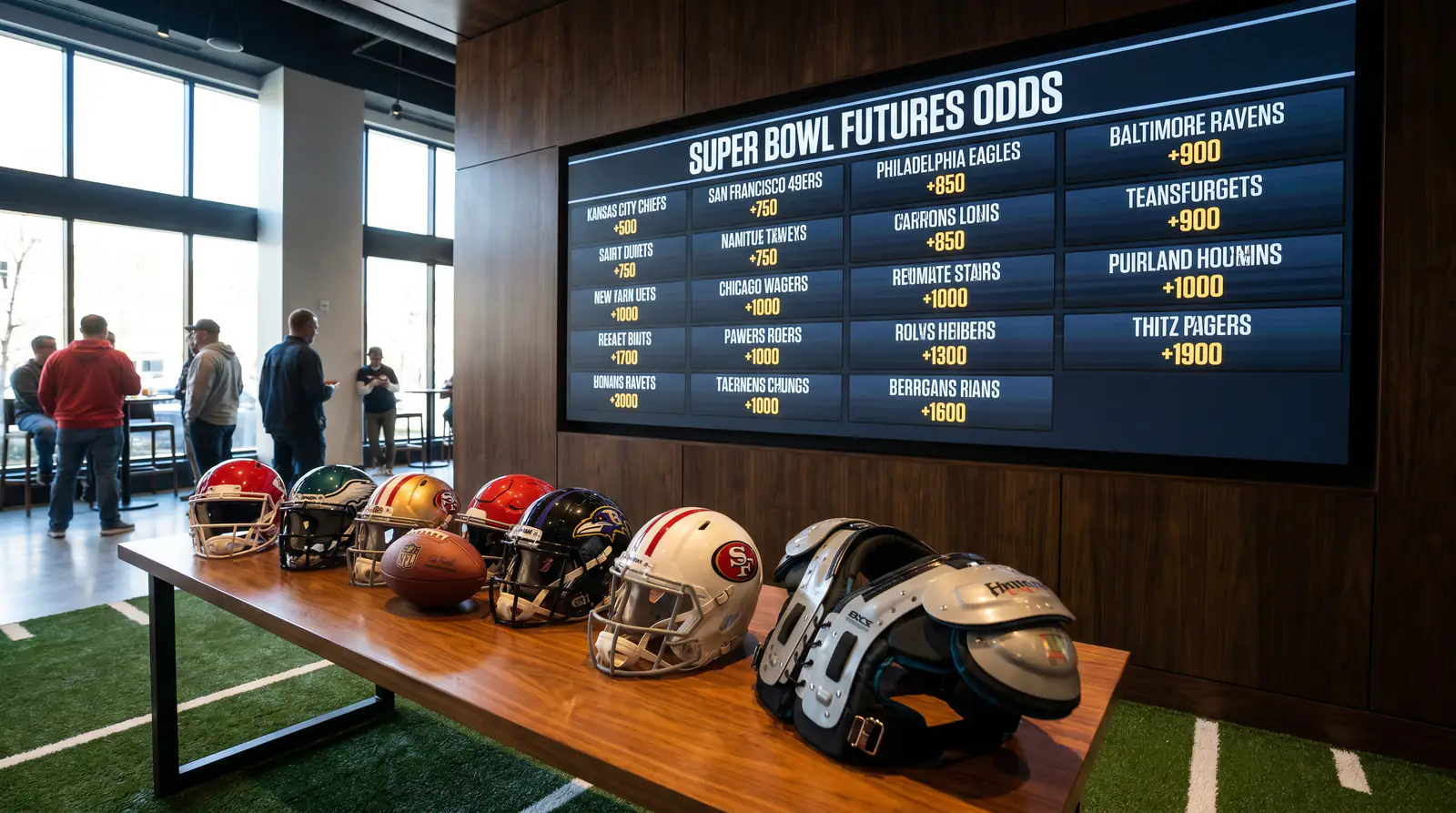
Most UK books open Super Bowl futures for the next season the night the current one ends. Some take them down for a couple of days for housekeeping. By the start of the new league year in March, every UK operator has the full 32-team board posted and trading. The first three months of those markets are the softest they will ever be.
This is counter-intuitive. The conventional wisdom says wait for more information. But the futures book in early March has no real money flowing through it. Prices are essentially copied from a couple of sharper US books with a bit of UK margin added on top. The lines do not have meaningful pressure on them yet. If you have a genuine offseason thesis – a quarterback acquisition, a coaching change, a roster spending spree – the early market is where to place that thesis at a price the public has not yet sharpened.
By August, the market has tightened considerably. Public money has flowed in on the popular contenders. Prices on top teams have shortened by 30-50%. Prices on long-shot teams have lengthened as the public ignores them. The dead-zone teams in the middle – 25/1 to 40/1 – are where most of the late-summer value hides.
Offseason Prices Versus Week One Prices
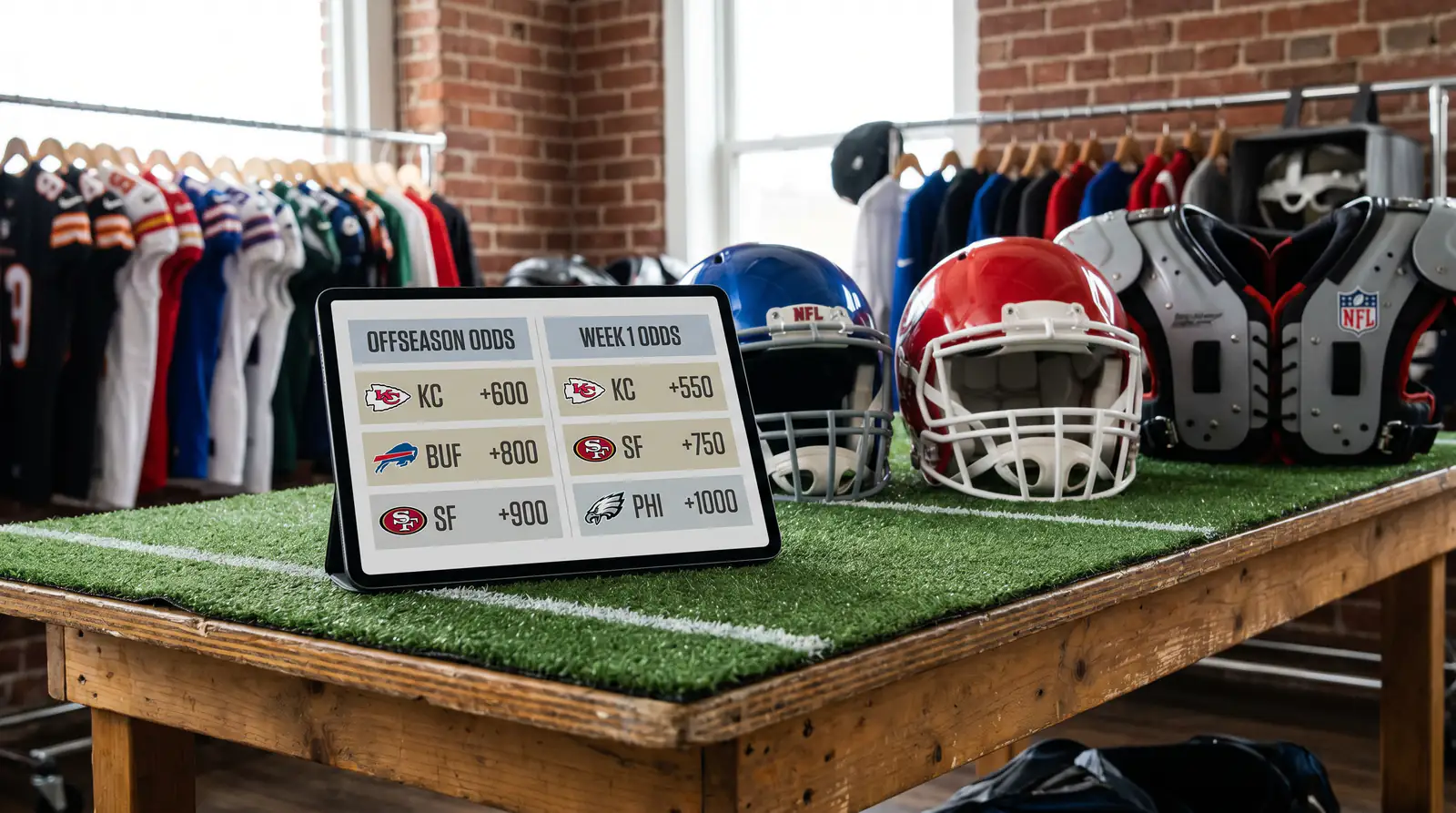
The largest single price move on most teams across an NFL year happens between the end of the playoffs and the opening of training camp. The second largest happens between the opening of training camp and Week 1. By the time the first regular-season Sunday arrives, the market has typically settled within 20% of where it will sit in late October, barring a catastrophic injury.
Week 1 is therefore one of the worst times to take a Super Bowl future. The price has absorbed every piece of preseason news, every speculative trade rumour, every magazine ranking. What it has not absorbed is the actual football. The first three weeks of the regular season reshuffle the board more than any other three-week stretch – teams thought to be contenders look ordinary, teams nobody backed look organised, and prices that were 18/1 in August become 12/1 by late September on the way up or 35/1 on the way down.
I rarely buy Super Bowl futures in Week 1. I buy them in Week 4 if the price has overreacted in either direction. The post-Week 3 board tells you more than the pre-Week 1 board, at a fraction of the public attention.
Hedging a Future When the Playoffs Arrive
The moment a Super Bowl future becomes interesting to manage is the moment your team reaches the conference championship. You have a ticket worth, say, £150 in expected value. Their conference championship moneyline is plus 120. Their Super Bowl moneyline if they win is plus 130, say. You can lock in a profit by hedging – back the opponent in the conference final, back the opponent in the Super Bowl if your team makes it – or you can let it ride.
The maths of hedging is unromantic. If your team is 50% to win the conference final and the hedge is fairly priced, the expected value of hedging equals the expected value of not hedging. You are buying certainty at the cost of upside. The question is not whether to hedge in some abstract sense – it is whether you are a small enough bankroll, or emotionally exposed enough to one outcome, that locking in a guaranteed return is worth surrendering the bigger swing.
I have hedged twice across a decade of futures betting. Both times I regretted it. The third time I will probably hedge again, because I know the regret comes from selective memory. The team that wins the Super Bowl is the one you remember. The teams you would have backed at plus 350 and watched lose by ten are the ones you forget.
Dead Money, Overround and the Cost of Holding 32 Tickets
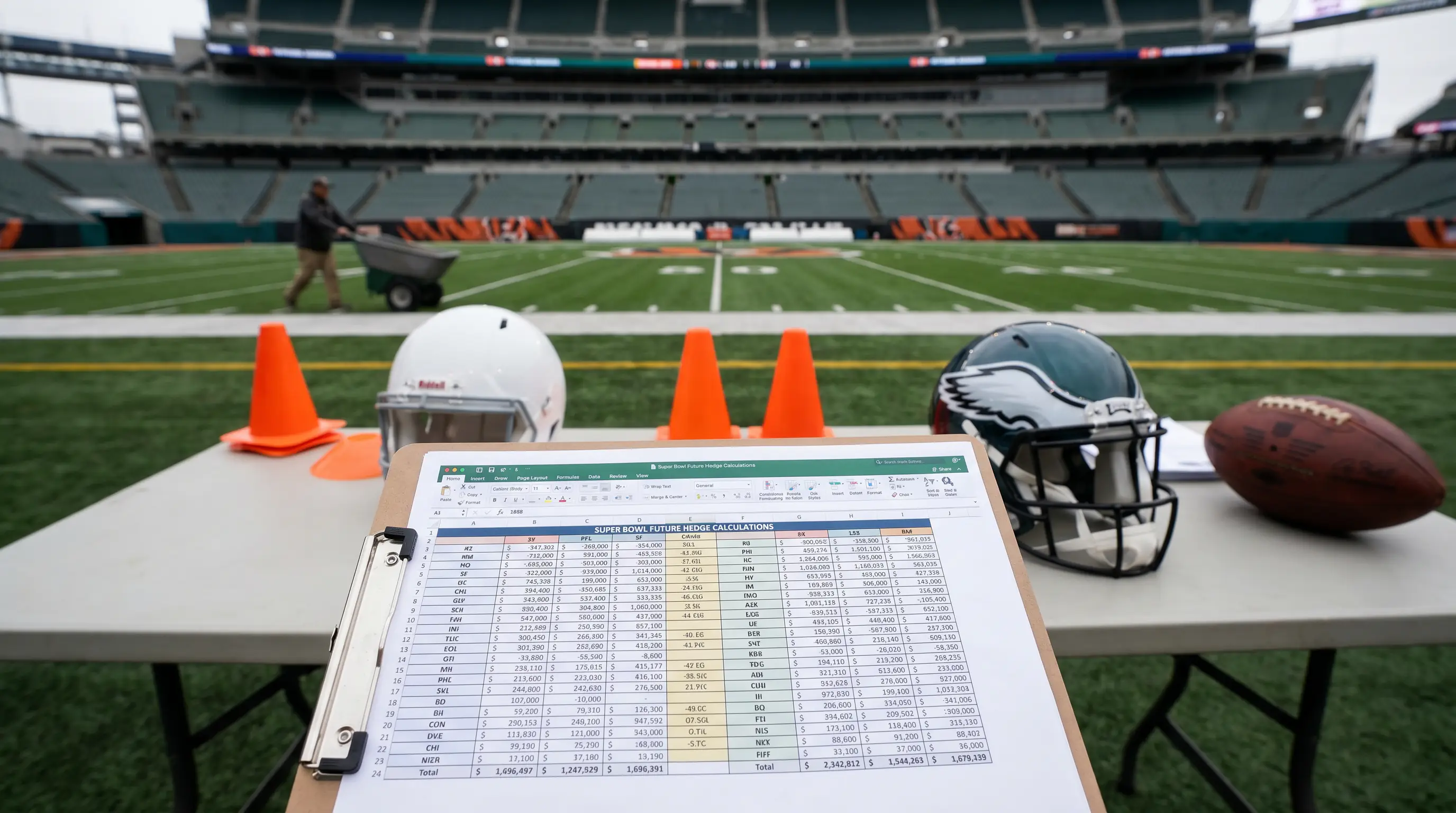
A Super Bowl winner book carries 32 prices. Sum the implied probabilities of all 32 teams at the prices a UK bookmaker is posting and you typically arrive at 120-130%. That is the overround. A two-way market has roughly 102-105% overround. Three-way football markets typically run 106-108%. A 32-way futures book runs at more than double the vig you would face on a moneyline.
What this means in practice: the average expected value of a randomly chosen Super Bowl future at a UK book is negative by roughly 8-12 cents on the dollar, before you have applied any judgement at all. To beat the market you need to outperform that headwind by enough to clear the vig. It is doable. But every time you place a future, you are spotting the bookmaker a meaningful percentage of expected value before kickoff.
The American Gaming Association estimated that 68 million US adults planned to bet on Super Bowl LVIII with around $23.1 billion in handle, and a non-trivial share of that volume was season-long futures liquidated at the championship. That liquidity exists because punters keep buying tickets at long odds and accepting the vig. It is not the worst bet in the market. It is also not the best.
Closing Prices Tell You What You Should Have Done
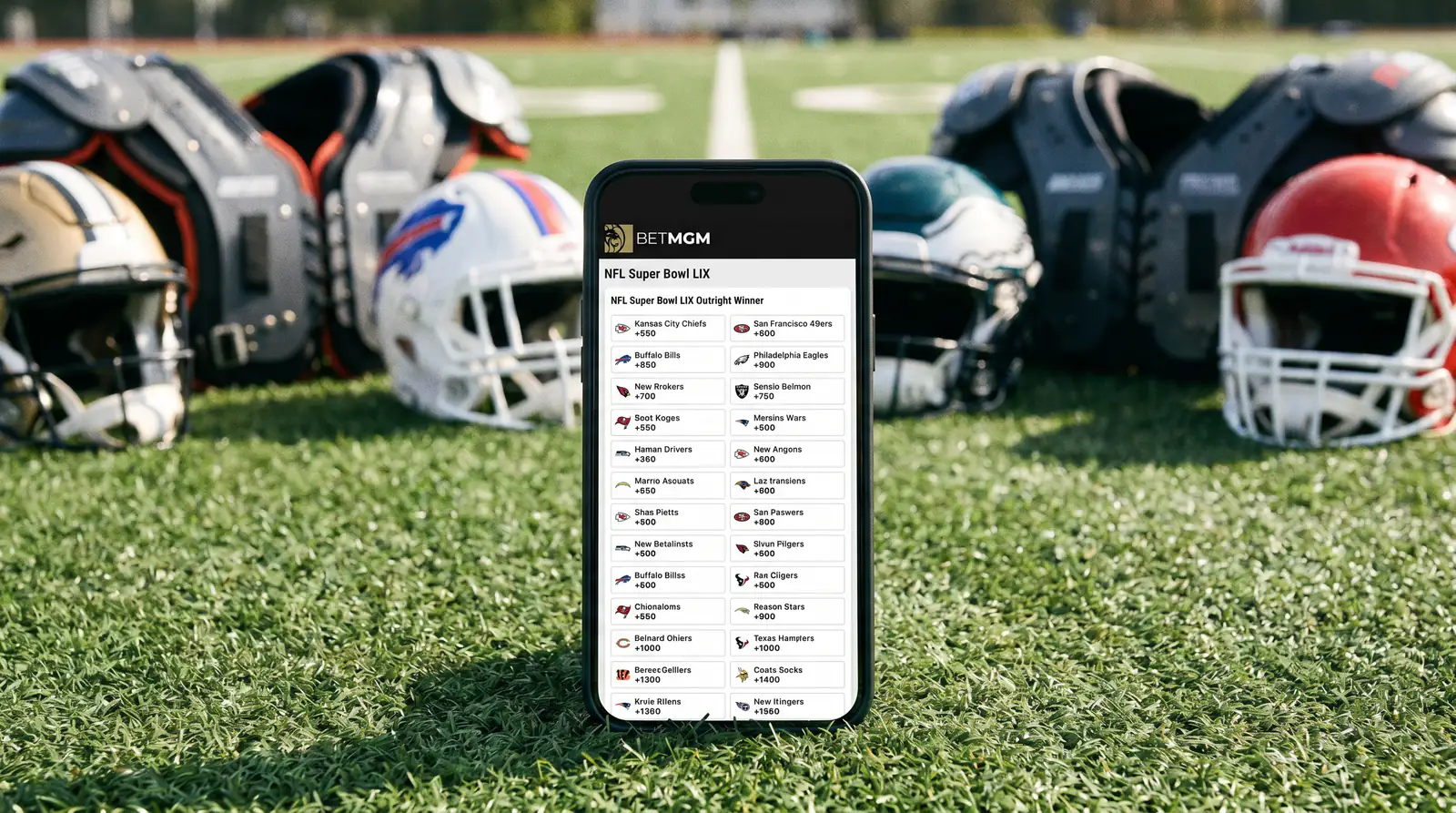
One habit that changed my futures betting more than any other: I record the closing price of every futures bet I make and compare it to my entry price. If I bought a team at 15/1 and they closed at 12/1 before the playoffs, I beat the market regardless of whether the bet ultimately won. If I bought at 15/1 and they closed at 22/1, I lost expected value even if the bet eventually cashed.
Closing line value is the single best predictor of long-run futures performance. Track it for two seasons and you will know whether your reads are genuinely sharp or whether you have been lucky. Most punters never track it. Most punters never realise their successful futures bets were lucky and their unsuccessful ones were sound.
Particular team-level futures deserve their own deep read – the Bills’ Super Bowl LX outlook from a UK pricing angle works through exactly the kind of position analysis I apply to any contender before pulling the trigger on a futures ticket.
Should I hedge a Super Bowl future once my team reaches the playoffs?
It depends on bankroll size and emotional exposure rather than pure expected value. Hedging at fair prices is a wash – you are converting upside into certainty. For smaller bankrolls or punters who would feel a Super Bowl loss disproportionately hard, hedging makes sense. For larger bankrolls treating futures as one bet in a diversified slate, letting the ticket ride is usually the higher-EV play.
How much overround is in a 32-team Super Bowl winner book?
Typically 120-130% at UK retail books. That is roughly 8-12 cents of vig per dollar wagered, more than double the overround on a standard moneyline. The implication is straightforward – Super Bowl futures need to beat the market by at least that much before they show any positive expected value, which is why offseason entry points on mispriced teams matter more here than in any other market.
