
 Available in US
Content
Why the Spread Punishes Lazy Punters
The first NFL spread I ever lost on a Sunday taught me more in three hours than three years of soccer betting had. Patriots minus three at a UK book, late kickoff, I took the favourite because the moneyline looked ugly. They won by two. The cup of tea went cold next to me while I worked out, slowly, that “minus three” and “winning the game” are two different events. A decade later, I still meet British punters making that same trip from Premier League handicaps into NFL spreads without realising they have walked into a different sport.
The point spread is the line that prices most NFL action in the UK. It looks simple – favourite gives points, underdog gets points, both legs around even money in fractional terms – but the structure underneath it rewards specific habits and ruthlessly taxes the rest. Live football sits at the top of the British betting pyramid, with 6% of all UK adults wagering on it in Q1 2025, and most of those punters now drift toward NFL in the autumn expecting the same instincts to carry over. They do not.

What the Spread Is Actually Pricing
Picture a bookmaker as a market-maker, not a fortune teller. The spread is not their guess at the final margin. It is the number that, in their model, splits expected money roughly down the middle between favourite and dog at the published price, usually 10/11 each side in fractional or around minus 110 in American. The job of that number is to balance the book, not to predict the game.
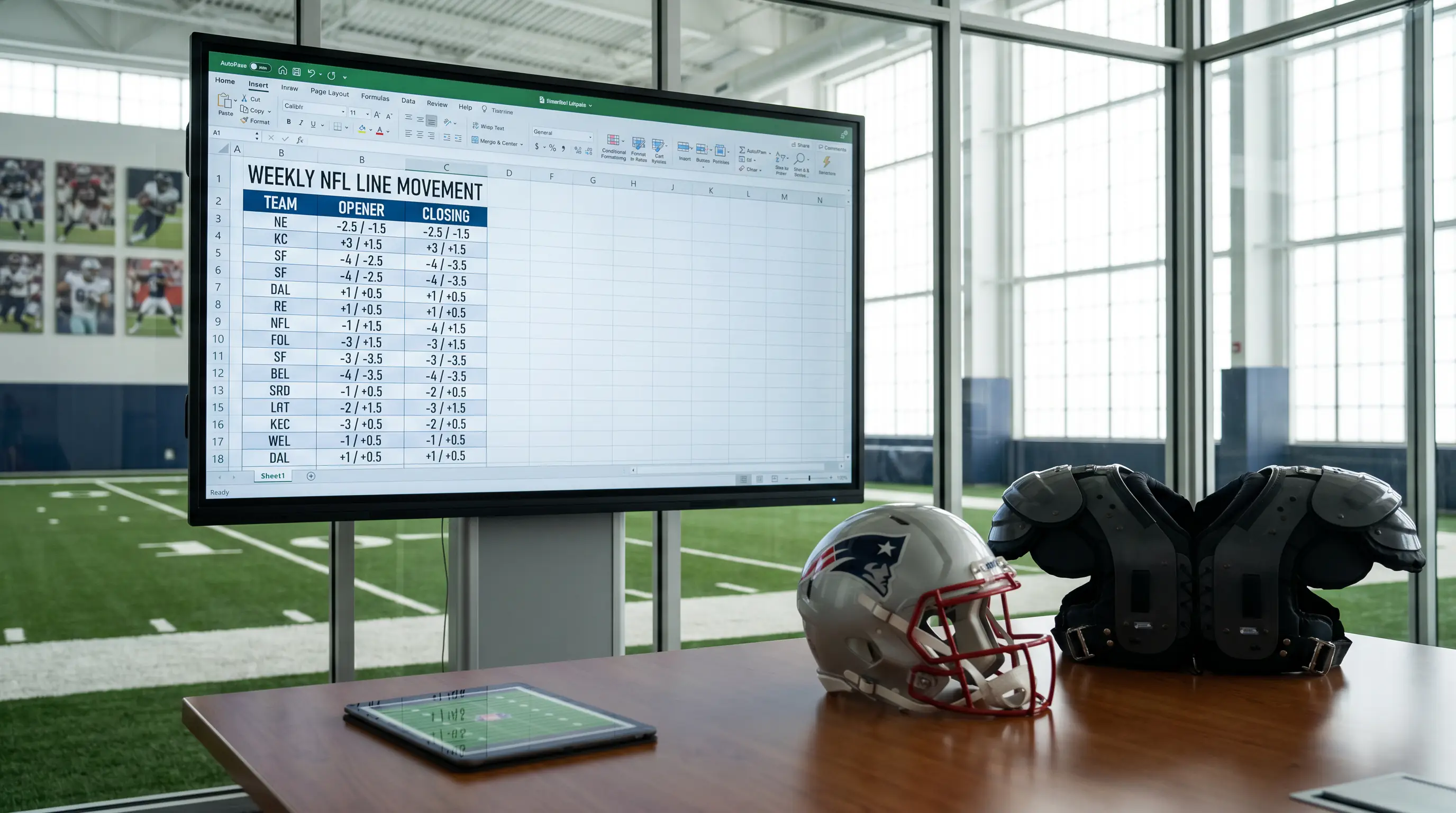
That distinction is the first thing every spread strategy depends on. When a line opens Chiefs minus 6.5 and closes Chiefs minus 5.5, the market did not get smarter about the game. The market took money, the book moved the number to attract the other side, and the closing line absorbed sharper opinions than the opening one. Closing lines beat opening lines for predictive accuracy almost without exception, which means the punter who waits until five minutes before kickoff is, on average, betting into the sharpest price of the week. The punter who fires Tuesday morning is betting into the softest. Neither is automatically better – but they are not equivalent, and pretending they are is how money quietly leaks out of a bankroll.
There is also the question of what the number ignores. A spread of minus three flattens out garbage time, weather, injury fluctuations during the week, kicker variance, and the chance the favourite leads 21-0 at halftime and coasts. All of that is folded into one decimal. Your job is not to predict the score. It is to decide whether the true distribution of outcomes sits to one side of that number.
The Tyranny of Three and Seven
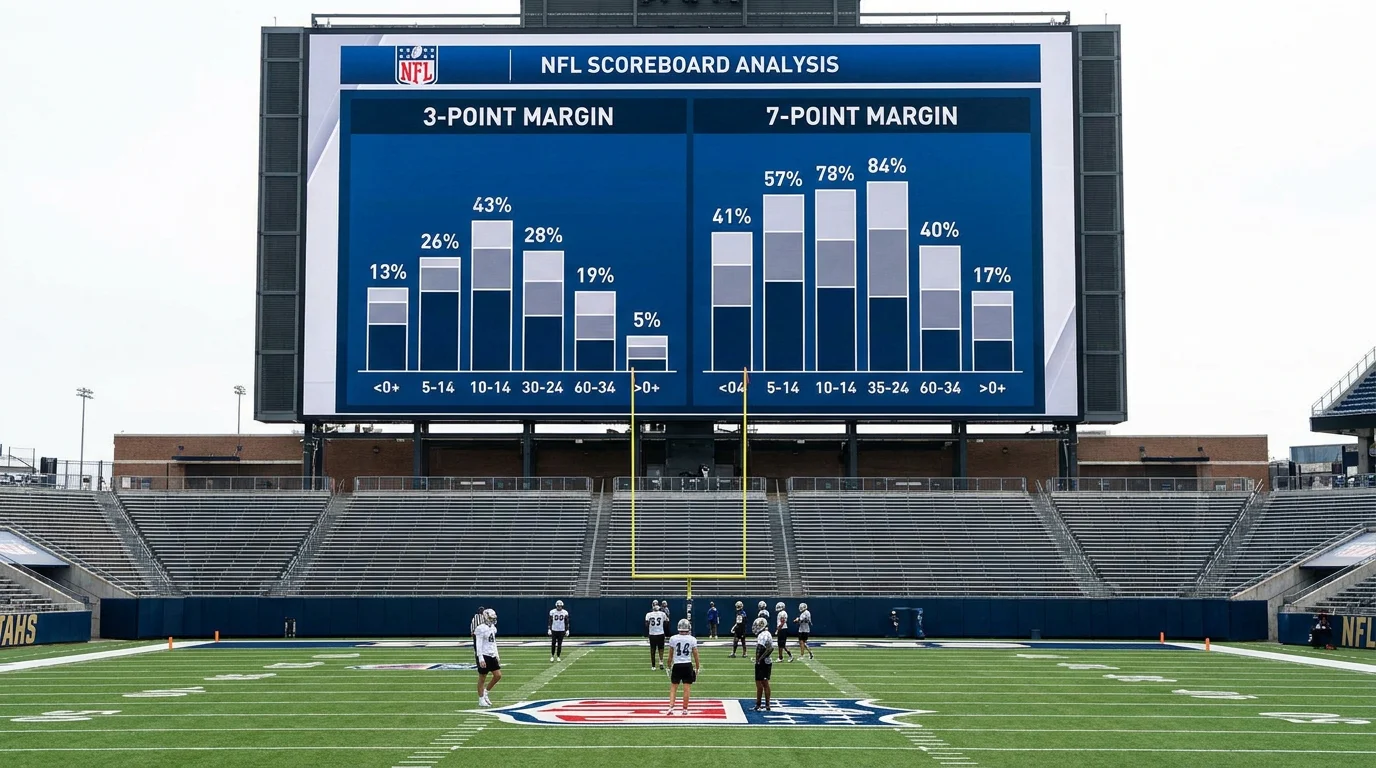
If you remember nothing else from this piece, remember this: NFL games are decided by three points more often than any other margin, and by seven a clear second. That is not folklore. It is the consequence of scoring units – a field goal is three, a touchdown plus extra point is seven – and it warps the value of every spread you ever bet.
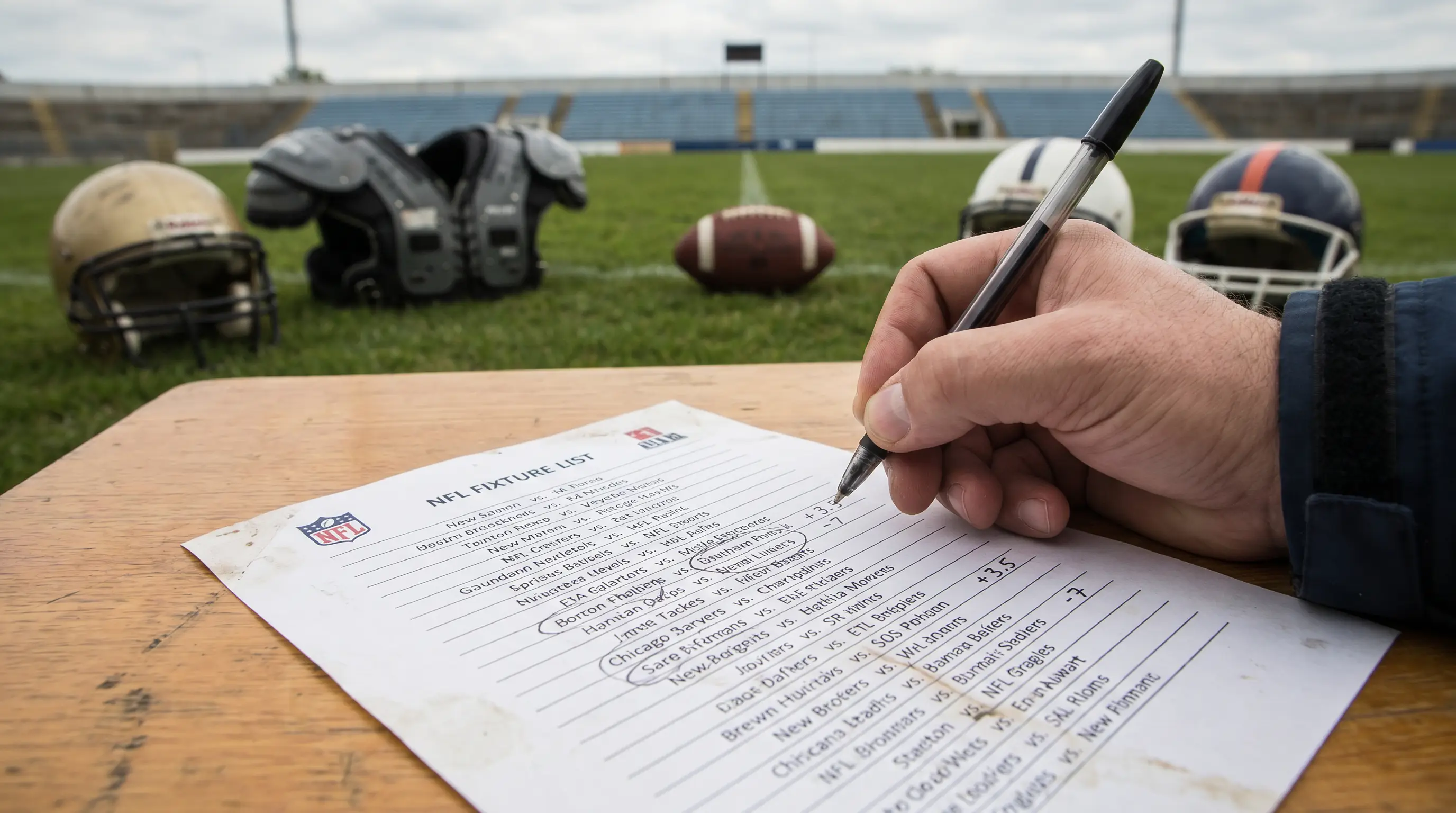
A line of minus 2.5 and a line of minus 3.5 look almost identical on paper. They are not. The half-point between them straddles the most common winning margin in the sport. A favourite at minus 2.5 wins the game and the bet on a three-point victory. A favourite at minus 3.5 wins the game and pushes the bet over the cliff on the same scoreline. Bookmakers know this. Their price moves around three are not symmetrical – the swing from minus 2.5 to minus 3 is steeper than the swing from minus 3 to minus 3.5, and the swing across three full points is steepest of all.
The same logic applies, with slightly less force, around seven. Eight-point teasers exist almost entirely because crossing both three and seven turns ugly favourites into reasonable propositions. I treat any line sitting on a key number – three, seven, ten, fourteen – as a different beast from a line sitting at 4.5 or 6.5. The half-points either side are not interchangeable. They are the difference between cashing a winner and watching a referee’s flag decide your week.
When to Pay for Half a Point
UK books offer alternate spreads, and the question of whether to buy points around the key numbers is one I get asked a lot. The honest answer is: sometimes, and never the way most punters do it.
Buying a half-point from minus 3 to minus 2.5 typically costs you 10-15 cents of juice – your price drops from roughly 10/11 to something like 4/5. That is a real cost. The benefit is that you turn every three-point favourite-wins game from a push into a winner. Whether that trade is worth it depends on how often you think the game will land exactly on three. League-wide, that figure sits north of 9% of all games. Pay 5-7% extra in price to capture a 9% outcome shift, and you are buying value. Pay 15% extra to move from minus 7 to minus 6.5, where games land closer to 6% of the time, and you are paying retail for wholesale.
Selling points works the other way. Take Bills minus 2.5 instead of minus 3, accept a worse price, but now a three-point win is a winner instead of a push. Most UK books offer this as a built-in alt line. The rule I use: buy points across three, occasionally across seven, almost never anywhere else. The maths only works at the key numbers.
The Home Dog and the Road Favourite Trap
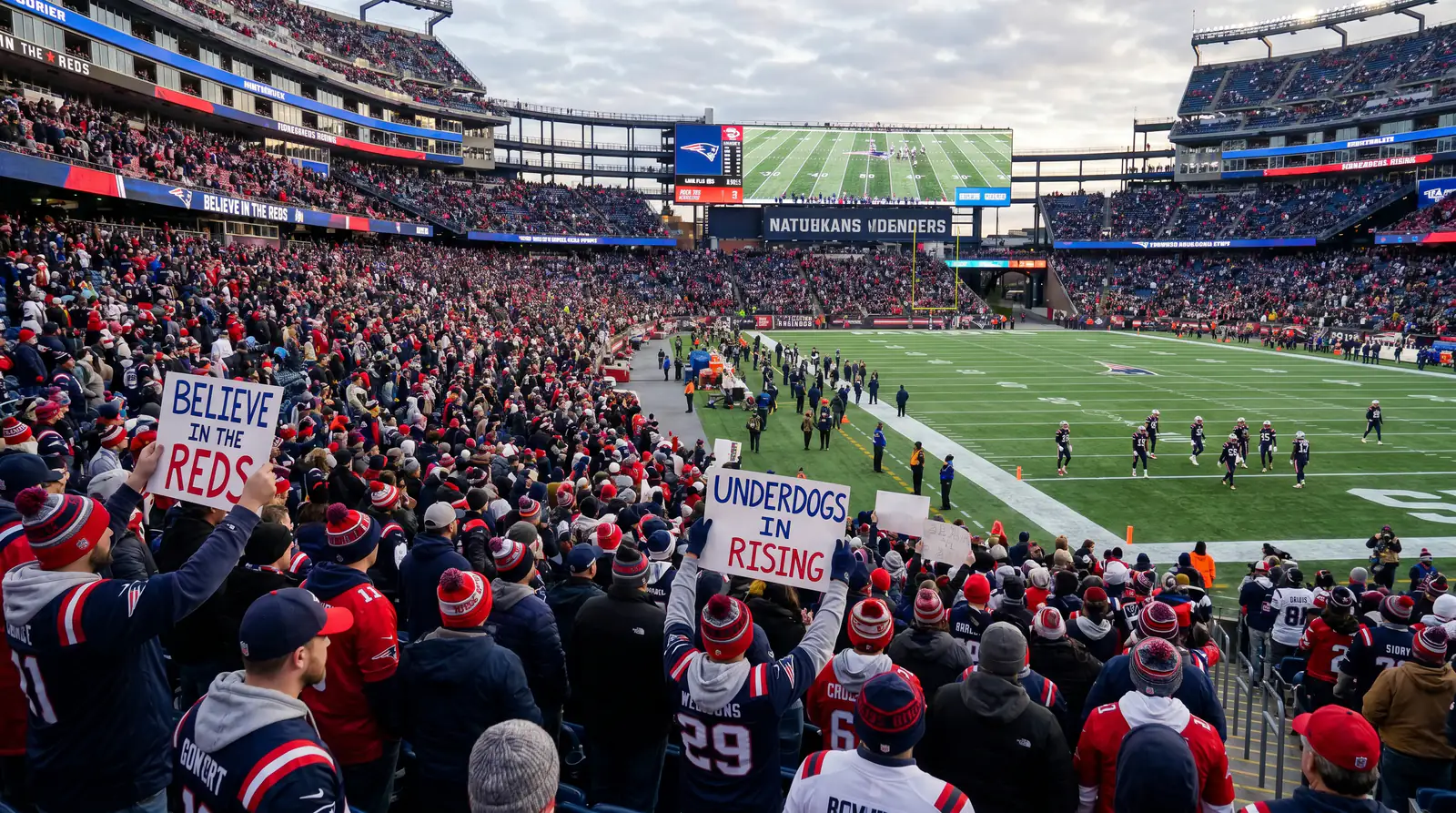
Here is a habit I picked up from years of tracking my own bets: I treat home underdogs and road favourites as opposite ends of the same mispricing spectrum. The home dog is the spot where casual money tends to undervalue a team – public bettors back the favourite, the line nudges, and the home side gets a slightly inflated number. The road favourite, especially the heavy one, is where casual money piles in for the wrong reasons and the spread quietly bloats past its fair value.
The pattern is not iron-clad. It is also not a betting system on its own. But it is a useful filter. When I see a home dog of plus 3.5 against a team travelling on a short week from the west coast, I look harder. When I see a road favourite at minus 7.5 against a divisional opponent who knows them too well, I look harder the other way. The number is doing work the public has already done for me.
The 15% of UK men who report betting on sport in Q1 2025 – against just 4% of women – represent a market that leans heavily into recreational, narrative-driven selections. That mass tends to push public sides. Quiet contrarian spots exist because of it.
Line Shopping: The Single Habit That Pays Most
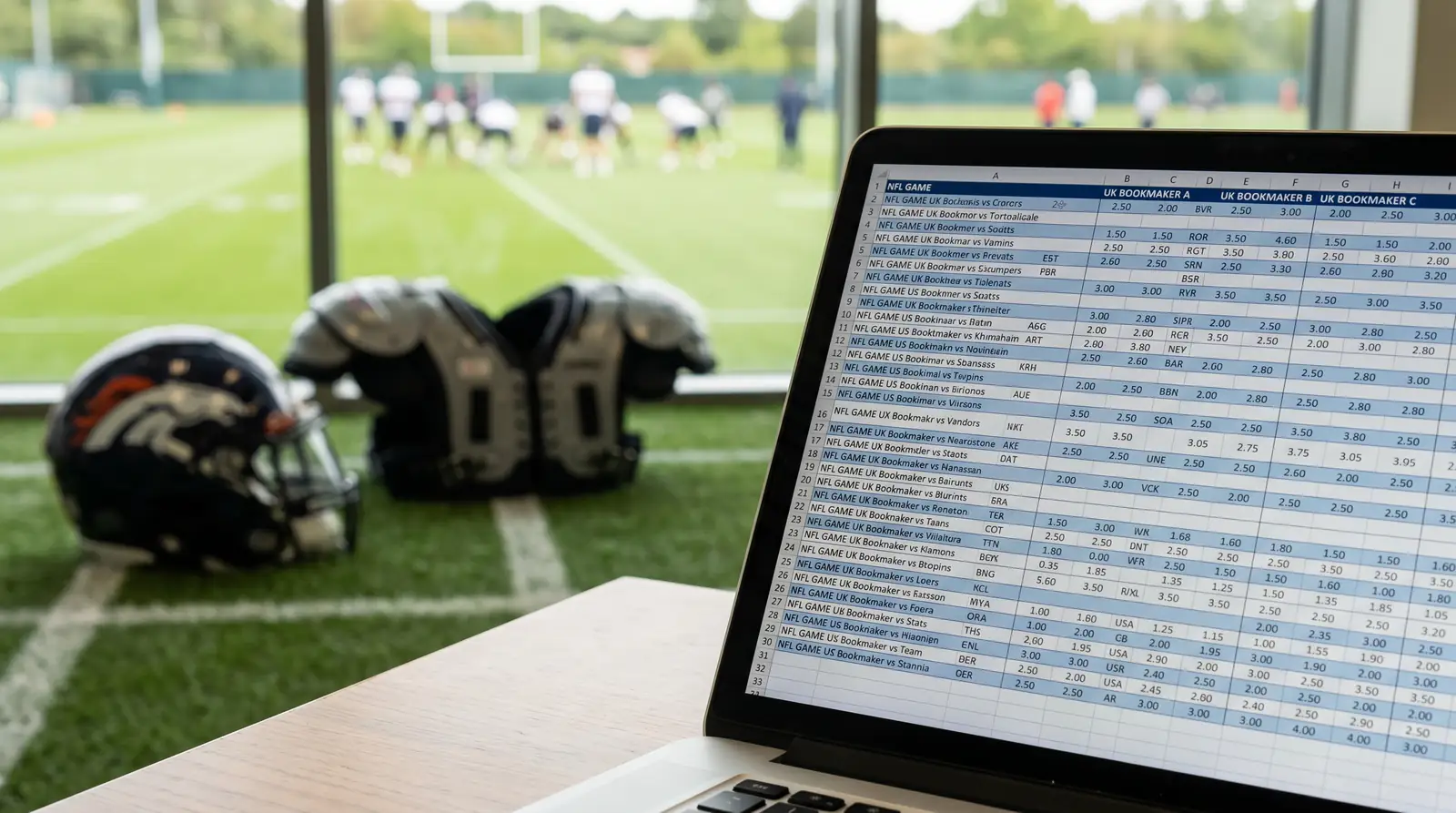
If you bet NFL spreads from one UK account, you are giving up edge every week. Six accounts is not extreme. Three is the minimum. The difference between minus 6.5 at one book and minus 7 at another, on a game that lands on seven, is the entire bet. As one industry analyst at NFL Sports Betting Stats put it, the totals market on a single fixture often trades more than the matchwinner – and the same liquidity dynamic plays out on spreads, with each shop pricing slightly differently into the same closing number.
I keep a spreadsheet open on Sundays – nothing fancy, just three books across the top, fifteen games down the side, and the spread plus price for each. The exercise takes twenty minutes and routinely surfaces half-point gaps that nobody would notice scrolling through one app. Half a point at minus 110 is worth roughly 2.5% in expected value at the key numbers. Across a season of fifty spread bets, that is not rounding error. That is the difference between break-even and a profitable year.
Once you have built the line-shopping habit, the next layer is understanding which sides of the spread the market consistently misprices. That is where the disciplined approach to backing NFL underdogs against the spread comes in – the patterns I look for in home dog cover rates and divisional spots build directly on the half-point arithmetic above.
Are NFL spreads sharper at opening or closing?
Closing lines are sharper. Opening lines reflect the book’s best initial estimate; closing lines have absorbed days of money from sharper bettors and adjustments around injuries and weather. That does not make late betting automatically better, but it does mean a Tuesday morning price is, on average, the softest you will see all week.
Should UK bettors buy half-points around three?
Often yes, at three specifically. Roughly 9% of NFL games land on a three-point margin, and the half-point swing from minus 2.5 to minus 3 typically costs 10-15 cents of juice. That is fair value, sometimes generous. Buying half-points anywhere away from three or seven rarely pays – books price those alt lines at retail.
