
 Available in US
Content
The Calculation That Pays for Itself in One Bet
Henry Hodgson, NFL UK’s General Manager, told Sky Sports recently that the league is focused on serving its 15 million fans and reaching new communities – a fanbase number that maps onto a betting market large enough to support sharp pricing across hundreds of UK accounts. That sharpness shows up in the implied probabilities baked into every line. The punter who can strip the bookmaker’s margin out of a price and read the true probability underneath has access to information the casual punter does not. Learning to do it takes ten minutes. Applying it consistently changes everything else.
This piece is the maths I use on every bet I take seriously. Nothing fancy. No model. Just arithmetic and a sense of when the answer the arithmetic gives you is worth backing.
From Price to Probability
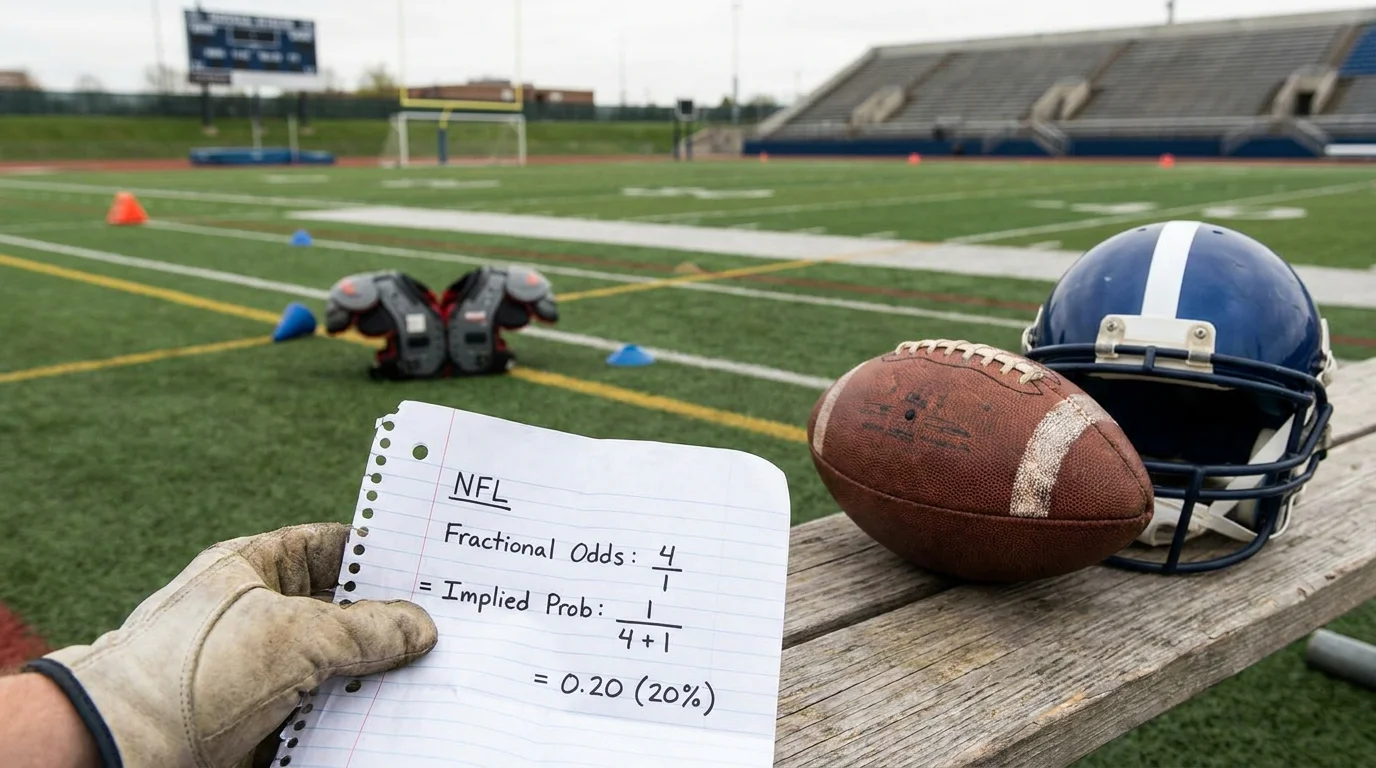
Any betting price is a probability dressed up in pounds and pence. Fractional odds of 3/1 say the bookmaker believes there is a 1-in-4 chance of the event – implied probability 25%. The formula is denominator divided by the sum of numerator and denominator: 1 divided by (3 plus 1) equals 0.25.
Decimal odds make this even simpler. Implied probability equals 1 divided by the decimal price. Decimal 4.00 equals 25% implied. Decimal 2.50 equals 40%. Decimal 1.91 – the standard NFL spread price – equals 52.4%.
The American conversion has two formulas because the format flips at zero. Negative American: absolute value divided by absolute value plus 100. Minus 200 equals 200 over 300, or 66.7%. Positive American: 100 divided by American plus 100. Plus 200 equals 100 over 300, or 33.3%.
Convert every price you see into implied probability. After a week of doing this, you will start to feel the difference between a 60% line and a 65% line in a way that fractional or American odds never quite communicate.
The Two-Way No-Vig Method
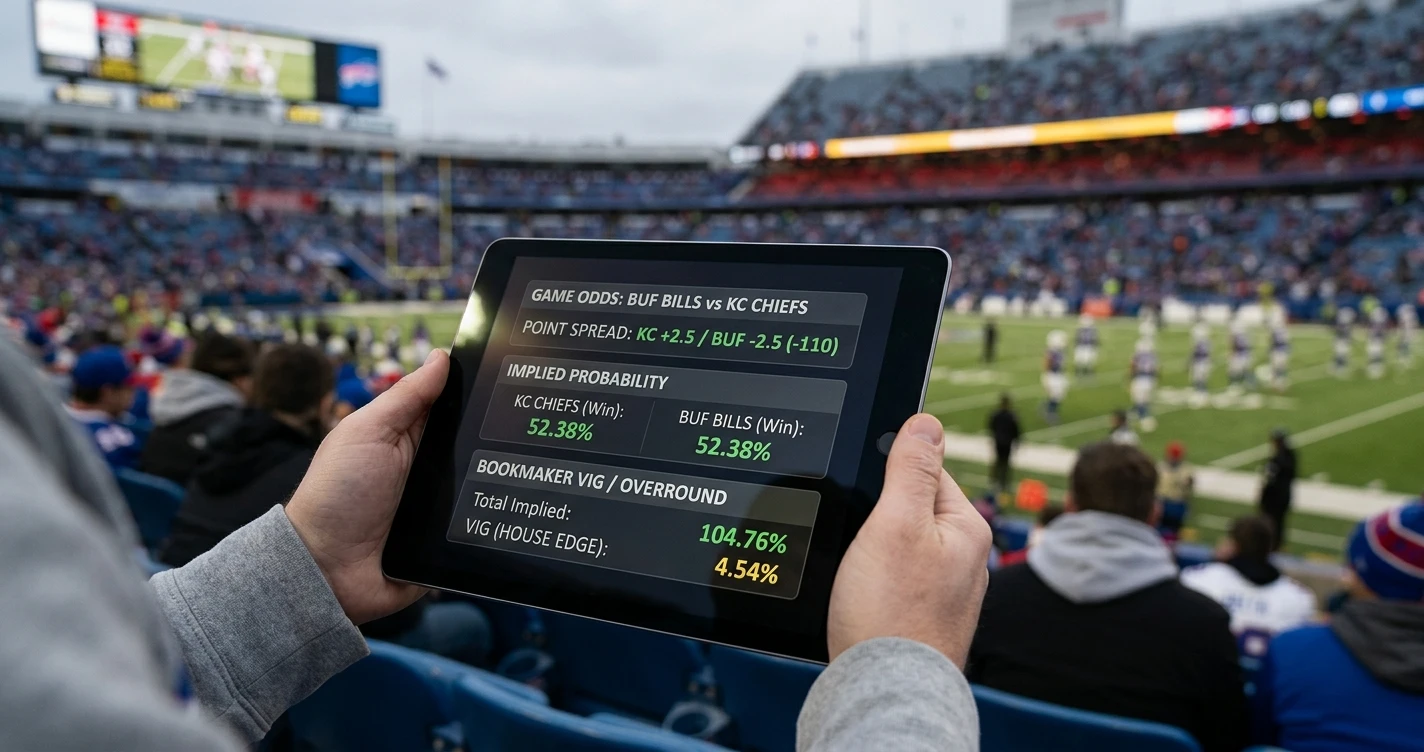
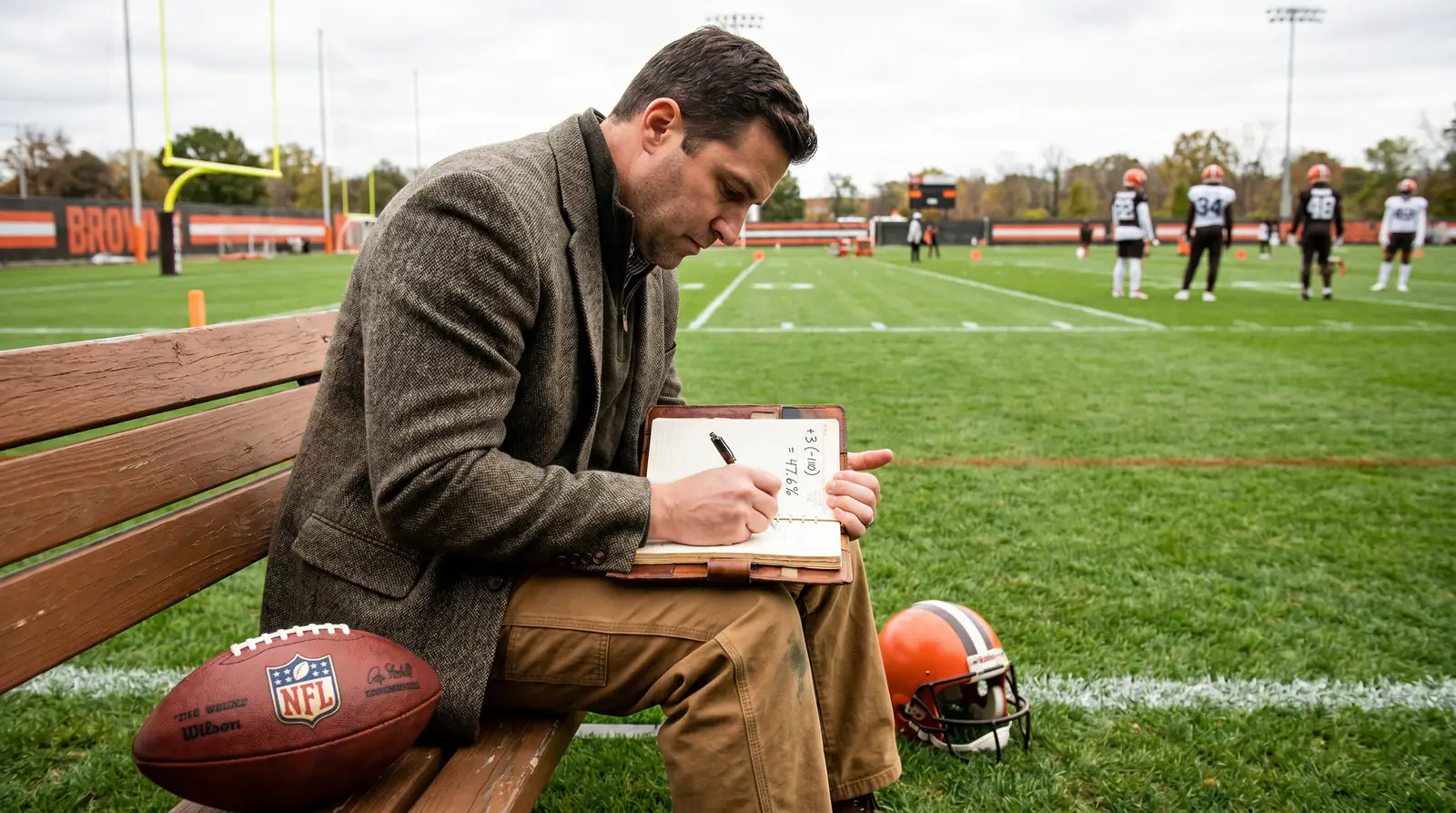
Here is where most punters stop and where the actual value extraction starts. A bookmaker’s two-way market – say, a spread with both sides priced at minus 110 – gives you implied probabilities that sum to more than 100%. Two sides at minus 110 each imply 52.4% probability. Together that is 104.8%. The 4.8% over 100% is the vig.
To strip the vig and recover the bookmaker’s underlying view, divide each side’s implied probability by the sum. Take the spread example: each side’s no-vig probability is 52.4 divided by 104.8, which equals 50%. The bookmaker’s true read on the game is 50/50 once the margin comes off.
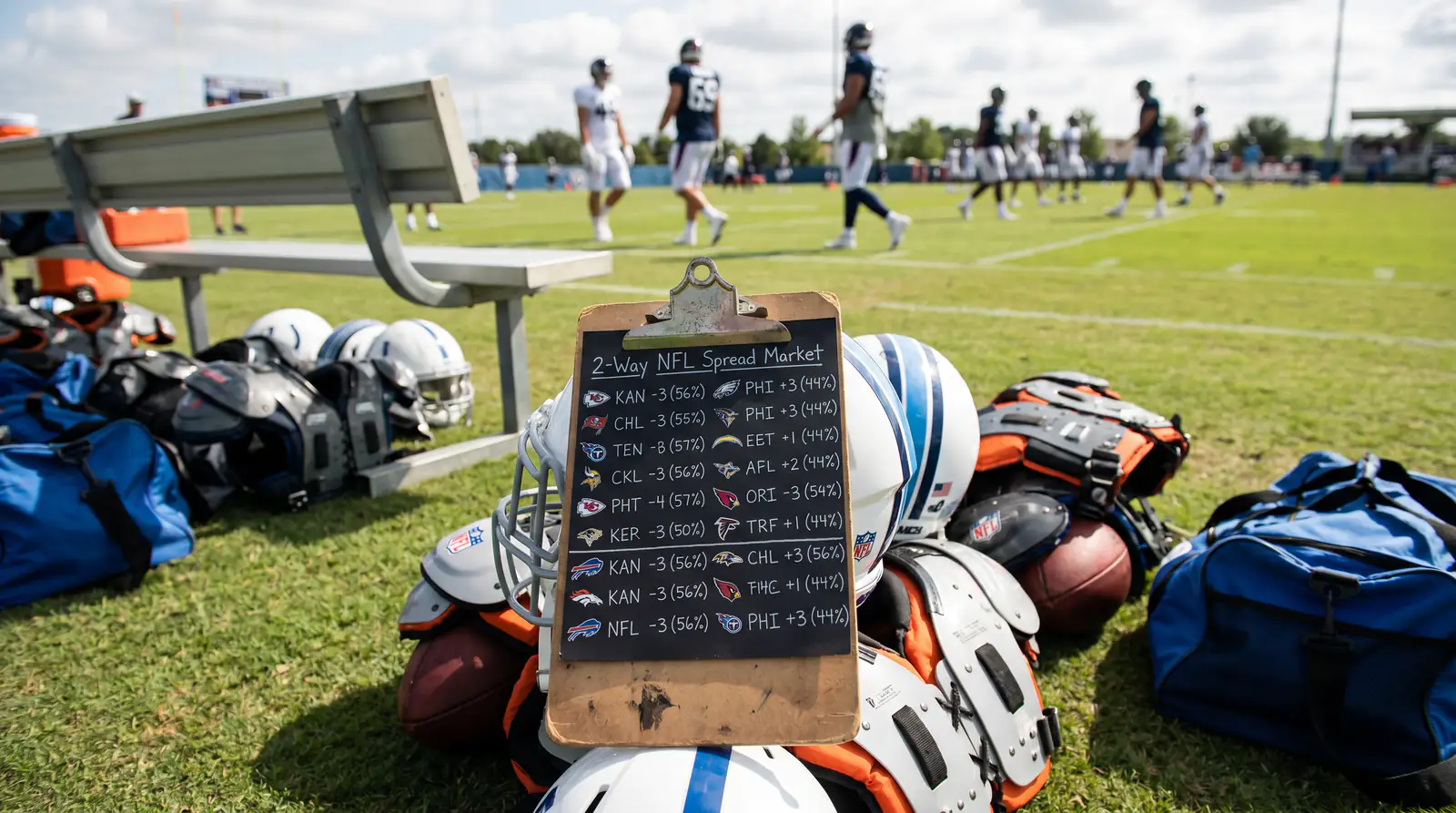
Run the same method on an asymmetric spread. The Bills minus 6 priced at 4/5 (decimal 1.80, implied 55.6%) against the Jets plus 6 priced at evens (decimal 2.00, implied 50%). Sum is 105.6%. No-vig for the Bills equals 55.6 divided by 105.6, or 52.7%. No-vig for the Jets is 47.3%. The bookmaker thinks the Bills are 52.7% to cover at minus 6 once the margin is removed. If your model thinks they are 56% to cover, you have an edge worth quantifying.
Three-Way Markets and Why They Are Different
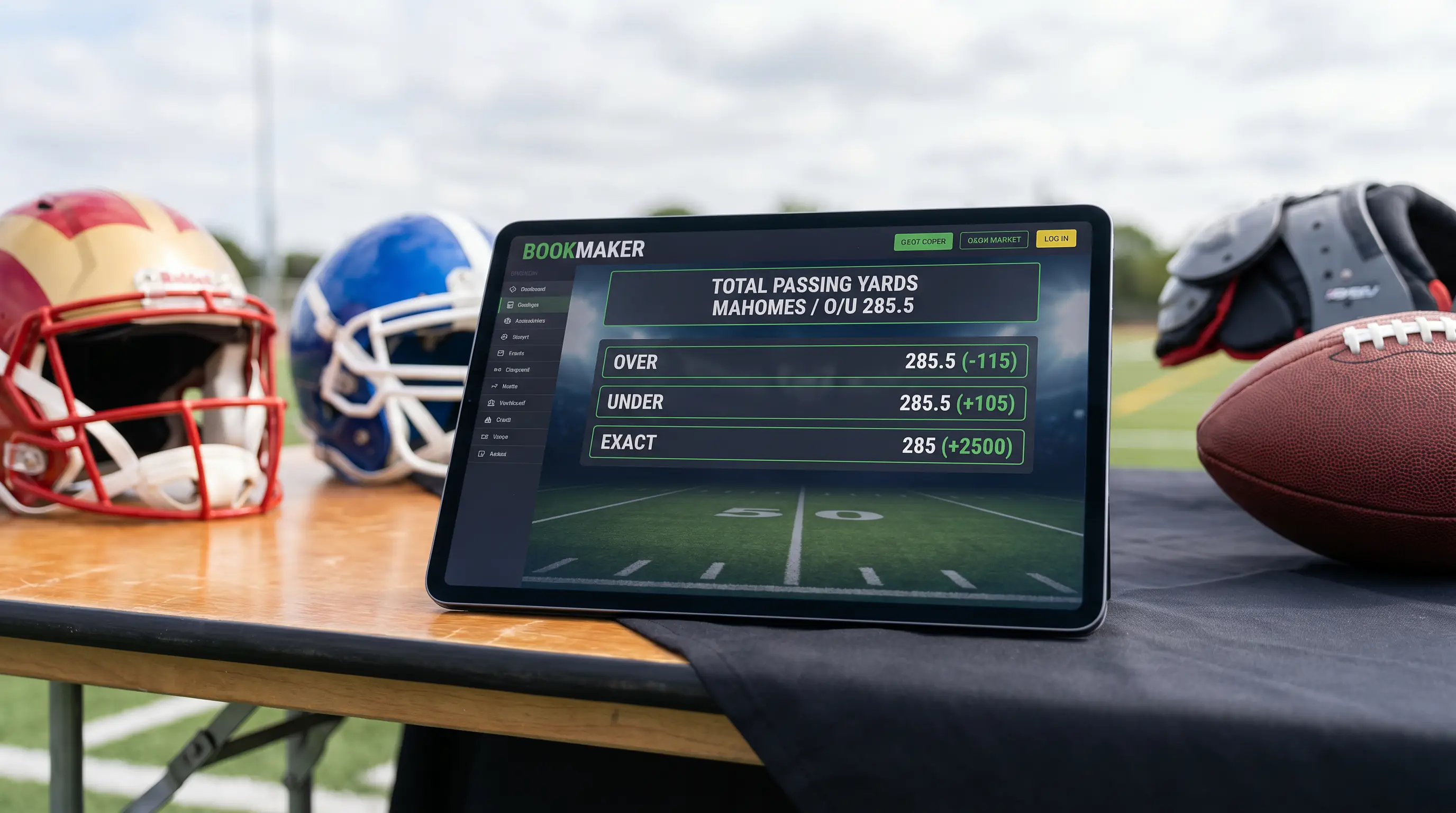
Some NFL markets – first scoring play, exact margin, drive outcomes – are three-way or worse. A three-way market has three implied probabilities that sum well above 100%, typically 108-112%. The no-vig method still works: divide each side’s implied probability by the total. The vig is just larger, and the bookmaker’s edge per pound staked is correspondingly higher.
Three-way markets are where retail punters lose money fastest because the larger vig is hidden behind the appearance of more interesting prices. A 7/1 longshot in a three-way book might have a no-vig fair price of 9/1. Backing it at 7/1 means accepting a 22% implied probability against a true probability of 10%, which is a brutal trade.
The 8% of UK adults betting on sport and horse racing online in Wave 3 of the GSGB during late 2025 are increasingly exposed to multi-way prop markets through bet builders and same-game multis. Each additional way in a market is another spot where the bookmaker’s margin compounds. The maths is exactly the same – strip the vig before judging value – but the discipline matters more.
Expected Value: The Number That Decides Whether to Bet
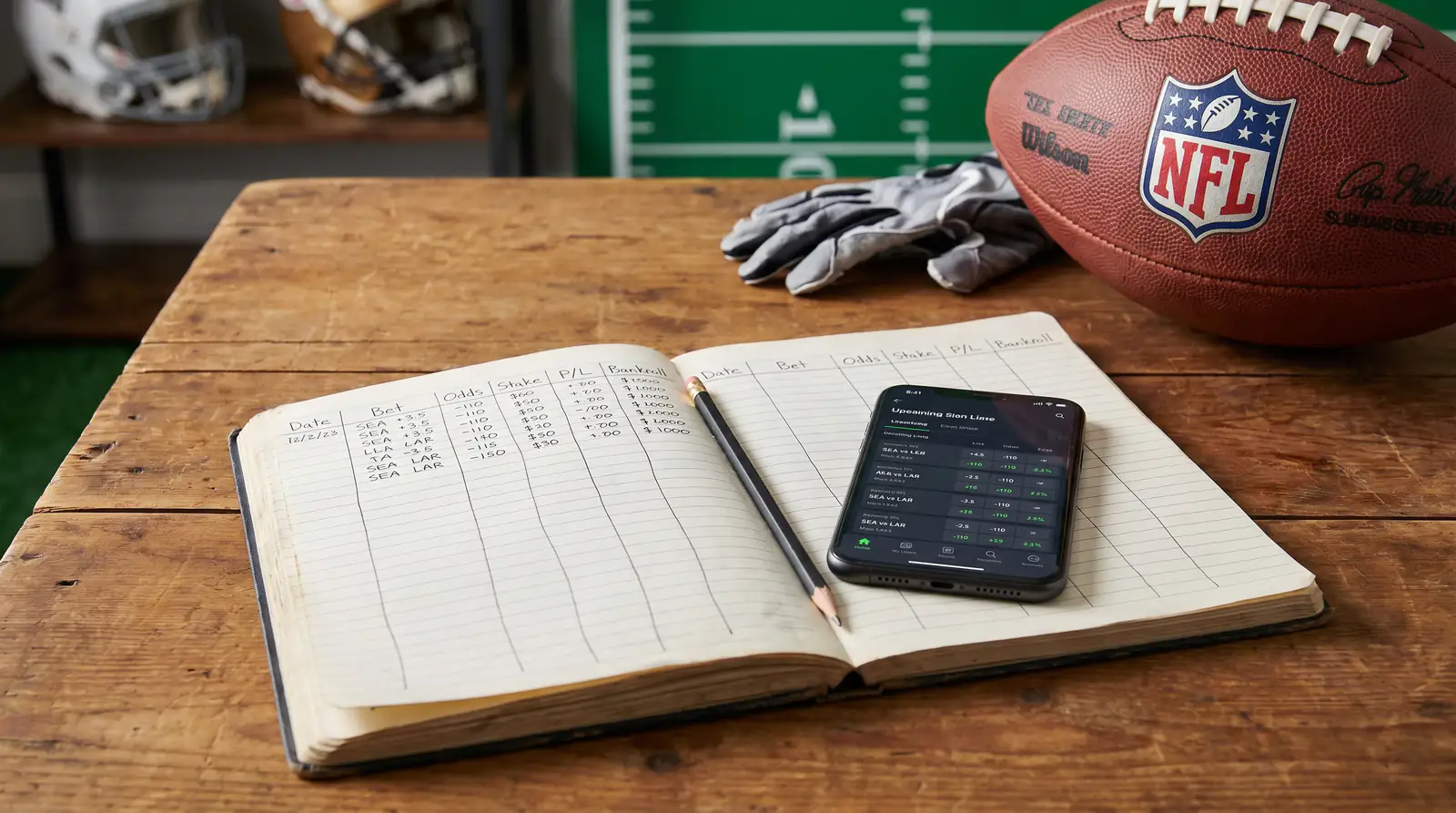
Once you have a no-vig probability for the bookmaker’s view, you compare it to your own probability estimate. Expected value (EV) equals (your probability times potential profit) minus ((1 minus your probability) times stake). Quicker shortcut: if the decimal odds you are taking are higher than 1 divided by your probability, the bet has positive EV.
Worked example. Your model thinks the Chiefs are 60% to win a game outright. The bookmaker prices them at decimal 1.75 (minus 133 American, 3/4 fractional). One divided by 0.60 equals 1.67. Your fair odds are 1.67 and the bookmaker is offering 1.75 – bet is positive EV by approximately 5%.
UK online real-event betting GGY hit £596 million in Q4 2024-25, up 5% on the year. That volume includes a great many bets placed at negative EV by punters who never ran this calculation. The bookmaker’s GGY exists because the average bet is negative EV. Your job is to bet the exceptions.

How Small an Edge Is Worth Betting
This is the question I get asked most often by punters new to no-vig thinking. The honest answer: smaller than you would intuitively guess, provided your model is genuinely calibrated.
An edge of 2% is real if you are sure of it. The variance of NFL outcomes is high – single bets win and lose for reasons unrelated to the underlying probabilities – and small edges only show up across hundreds of bets, not dozens. But across 200 bets at 2% EV with appropriate stake sizing, the expected return is meaningfully positive. The catch is the “if you are sure of it” part. Most retail punters dramatically overestimate the calibration of their own probability estimates. A claimed 60% read is often a real 53%, which means the 5% perceived edge is actually a 2% negative EV bet.
My personal rule: I will bet a perceived edge of 3% or more on standard markets where I have a clear thesis. I will not bet a perceived edge of 1-2% unless the market is one I have tracked across hundreds of bets and I trust my calibration in that specific corner.
Applying the Method to Spreads and Totals
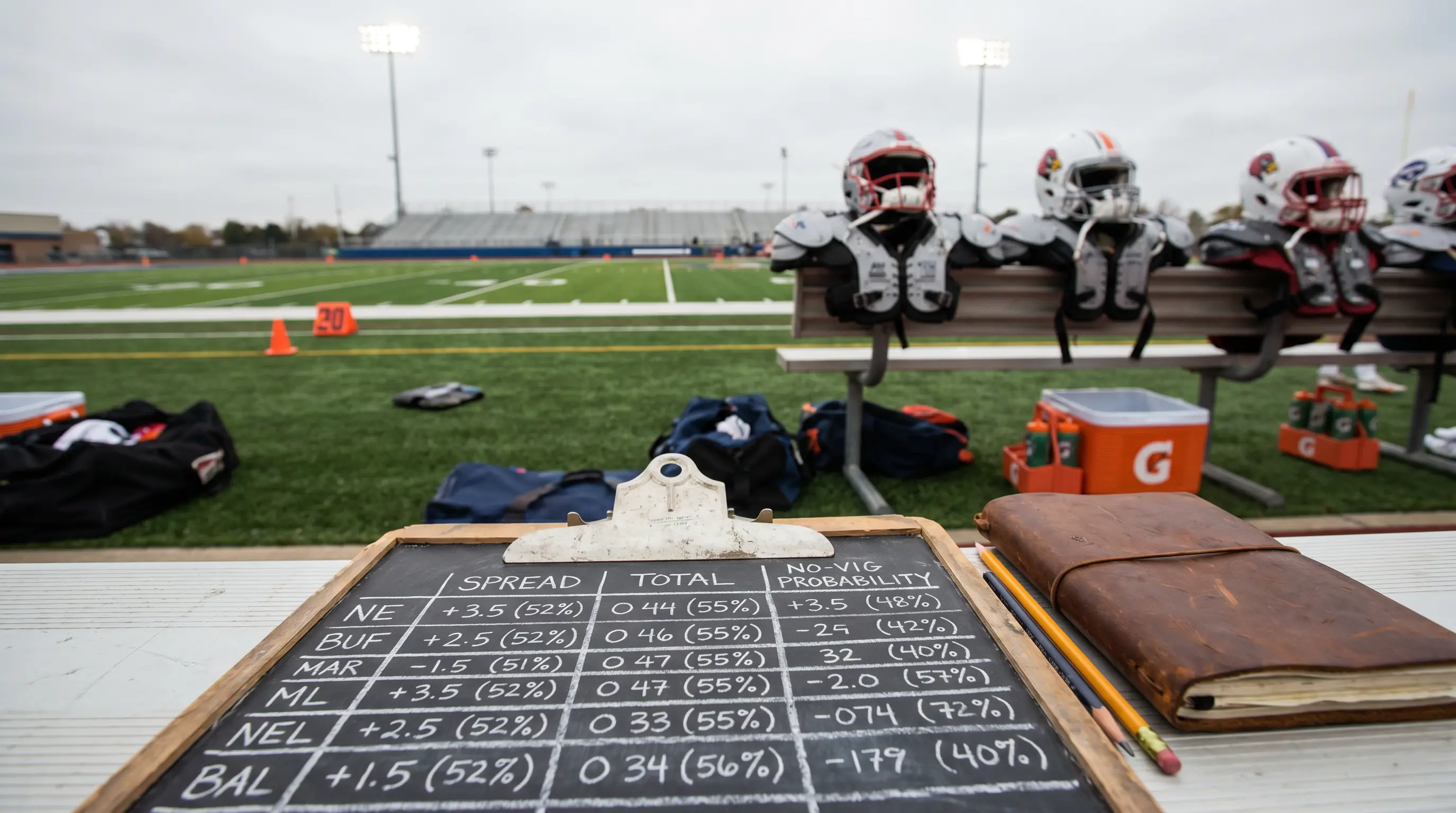
The cleanest application of no-vig thinking is on standard spreads and totals at minus 110 both sides. Stripping the vig leaves you with the bookmaker’s true probability – almost always 50/50, because the line is set to balance the book. Your edge comes from disagreeing with where the line sits, not from probability calculations.
On alternate spreads, the maths matters more. A book offering Bills minus 6.5 at 5/6 (decimal 1.83) and minus 9.5 at 6/4 (decimal 2.50) is selling you two different implied probabilities. Strip the vig from the two-way market at each line and you have the bookmaker’s estimate of the chance Buffalo wins by at least 7 versus at least 10. Compare to your own estimate and decide where the value sits.
The American Gaming Association estimated $23.1 billion in handle on Super Bowl LVIII alone, almost all flowing through spreads, totals and props priced with embedded vig. The punters who clear that vig are the ones running this kind of arithmetic on their phones during commercial breaks.
The conversions you need to run any of this in your head come down to fluent translation between American, fractional and decimal – the pocket conversion sheet I use for American to fractional sits behind every implied probability calculation above.
Is the no-vig line the true probability of an outcome?
It is the bookmaker’s best estimate of the true probability, not the actual true probability. The book’s estimate is informed by sharp money and refined over days – it is a strong baseline but not perfect. The reason no-vig pricing matters is that it gives you the cleanest read on what the market thinks, which is the comparison point for your own probability estimate.
How small an edge is worth betting?
Perceived edges of 3% or more are worth backing on markets where your read is grounded in a specific thesis. Edges of 1-2% only translate into long-run profit if your probability estimates are genuinely calibrated, which most retail punters overestimate. Sample size matters – a 2% edge needs hundreds of bets to express itself reliably in your results.
