
 Available in US
Content
The Bet That Has Funded My Whole NFL Season
Three of my best NFL betting years finished green for a single reason: I backed underdogs against the spread, against my instincts, every time the data said to. Roger Goodell’s frequent argument that London could support not just one franchise but two reflects a UK fanbase deep enough to drive serious betting handle — and the underdog ATS angle is where that handle gets its best risk-adjusted return. The market on dogs is not a hidden secret. It is a measured, repeatable edge that survives because public money flows toward favourites with a stubbornness that data has not unwound.

The Gambling Survey for Great Britain shows 15% of UK men placing sports bets in Q1 2025 against 4% of women. A meaningful slice of that male sports-betting cohort gravitates toward backing favourites and over-totals out of optimism, which is the structural anchor for underdog ATS value. Live football remains the most popular sport for UK betting at 6% of adults, and the same psychology that overprices favourites in Premier League markets carries over to NFL.
The Historical Cover Rate Says Something the Public Refuses to Believe
Across modern NFL history, underdogs against the spread cover at roughly 50-51%, with home dogs historically covering closer to 52%. The numbers vary year to year, but the long-run pattern is consistent: dogs cover at or slightly above the breakeven threshold of 52.4% required to overcome a -110 spread vig.
The reason matters more than the number. Spreads in the NFL are tight by design — the median spread sits at 3 points, and most games are decided by margins close to the line. A team getting 6.5 points needs to lose by 6 or fewer to cover, which is the most common margin band in football. The cover rate hovers around 50% because the line is set efficiently, but the public’s persistent overweight on favourites pushes lines a half-point too long, which is enough to tip the cover rate toward the dog.
The specific spots that consistently outperform are home dogs of 3 to 7 points and divisional underdogs of any size. Both categories have shown long-run cover rates in the 53-55% band, which is above the breakeven threshold and produces sustained profit when bet with discipline.
Home Dogs Cover More Often Than Road Dogs
The home dog is the headline situational bet in NFL ATS strategy. A team favoured to lose, playing in front of its own fans, with the structural advantages of home field, gets a points cushion that overstates the matchup. Books know this, but the public pressure on favourites pushes the line wider than the model says it should be.
The mechanics are clear. Home field is worth roughly 1.5-2.5 points in the modern NFL — less than it used to be, but still meaningful. A team that would be a 5-point road dog becomes a 2.5-3 point home dog after the home adjustment. The public sees the favourite’s road profile and pushes the line another half-point longer, which means the home dog is effectively getting 3.5-4 points when the matchup actually rates at 2.5-3.
That extra half-point of value is the structural edge. Across the past two decades, home dogs of 3 to 7 points have covered at roughly 53-54%, which is above the 52.4% breakeven threshold and produces a small but real expected value advantage. The variance is high — any individual season can swing the cover rate by 3-4 percentage points — but the long-run pattern is real.
Road dogs are a different category. Road dogs cover at roughly 49-50% across the same period, which is structurally break-even after vig. Backing road dogs as a general strategy is not a winning play. The specific exception is the road dog of 7+ points in a divisional game, where familiarity with the opponent offsets some of the road disadvantage.
The Divisional Dog Edge Is Still Alive
Divisional games are the spot where the underdog ATS edge concentrates most sharply. The reasons are structural: divisional opponents play twice a year, they know each other’s tendencies, and the variance in matchup outcomes is compressed. A 7-point divisional favourite is rarely a 7-point favourite in reality. The matchup tends to play closer than the line suggests.
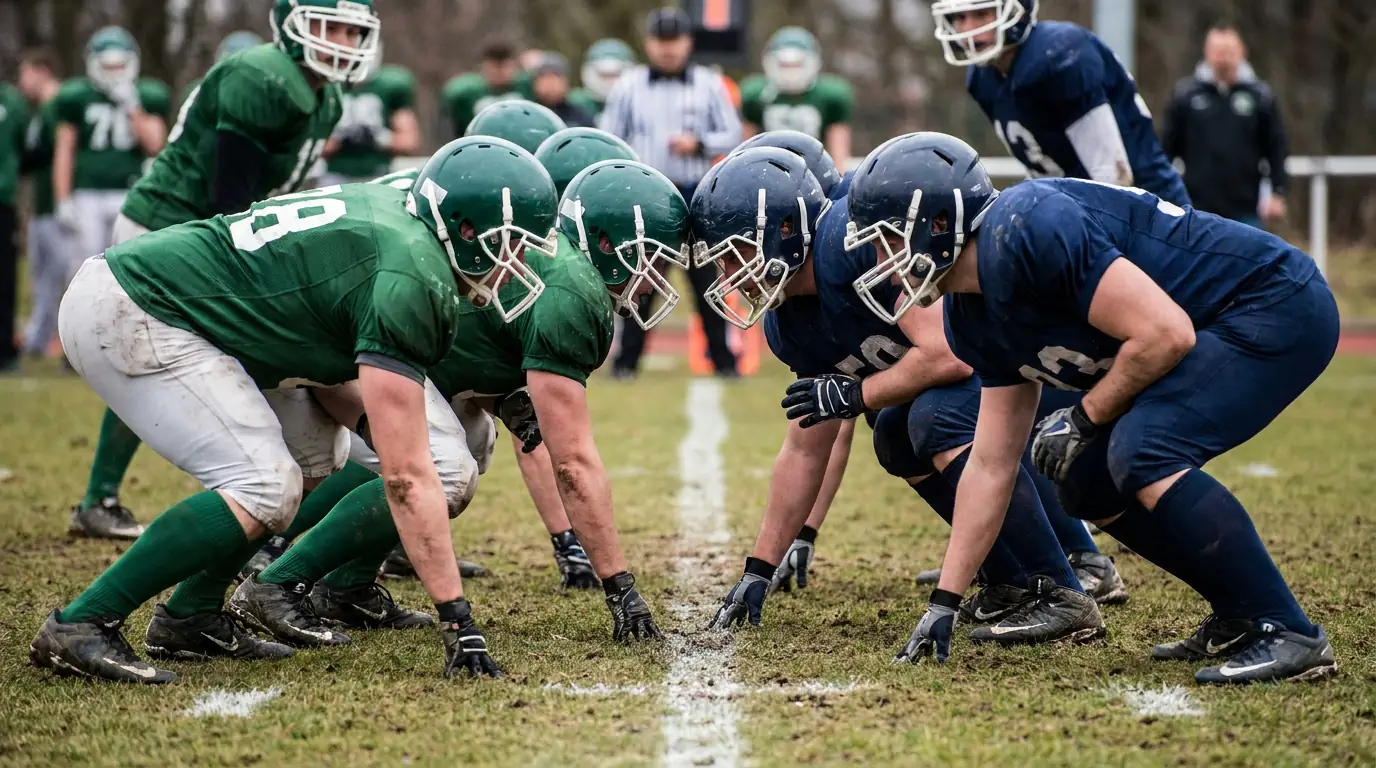
The cover rate on divisional dogs across the past decade sits at roughly 53-55% regardless of home or road status. The divisional familiarity factor outweighs the road disadvantage, which is the rare situation where road dogs become a legitimate ATS play.
The specific spot I look for is a divisional rematch where the first meeting was decided by 10 or fewer points, and the second meeting has a spread of 6 or more points. The implied gap between the two teams is being overstated by the line, because the rematch dynamics — adjustments, motivation, familiarity — pull the result closer to the first meeting. The cover rate on that specific setup has hovered around 56-58% in recent seasons.
Weather Dog Spots Are Counterintuitive but Real
Weather is one of the few factors that genuinely tips ATS outcomes in measurable ways. Heavy wind, cold temperatures and snow all compress scoring and favour the underdog, because the favourite’s offensive advantages are usually built on passing efficiency that weather degrades.
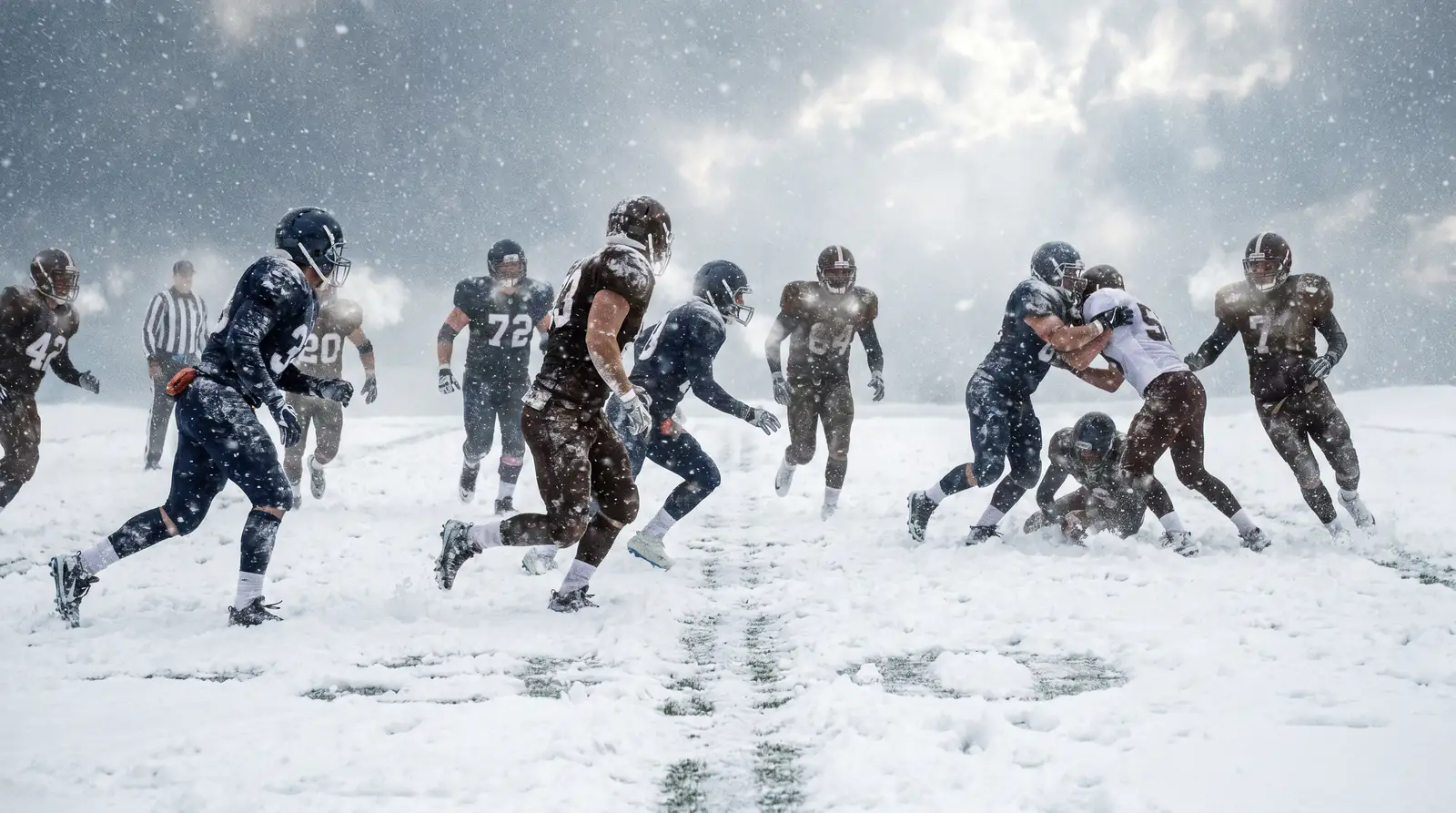
Wind is the single most impactful weather variable. Sustained winds of 15+ mph degrade passing accuracy meaningfully, and wind speeds of 20+ mph degrade passing efficiency dramatically. A 7-point favourite in a 22 mph wind game is structurally a 4-5 point favourite, because the passing offence that drives the favourite’s edge has been neutralised.
Cold weather has a smaller but real effect. Games played in temperatures below 30°F (-1°C) see scoring drop by roughly 2-4 points relative to neutral conditions, and the favourite’s cover rate drops by 4-6 percentage points. The mechanism is the same — passing offence degrades, the run game becomes more important, and the gap between the two teams compresses.
The bet I look for is the home dog of 4-7 points in a game with forecast winds of 15+ mph or temperatures below 25°F (-4°C). The line is set before the weather forecast hardens, so the dog price often holds steady while the actual conditions tip the matchup. The cover rate on that specific setup has been consistently above 55% across recent seasons.
Bankroll and Variance: The Reason Most Dog Bettors Quit
The biggest problem with underdog ATS strategy is variance. A 54% cover rate sounds robust, but over any 20-game stretch the actual results can range from 7-13 to 13-7. The losing stretches feel like ruin even when the strategy is sound. Most punters who back dogs systematically quit during a losing run, which is exactly when the math says to keep betting.

The discipline is to bet a flat unit size per ATS pick and to commit to the strategy across an entire season rather than across a single weekend. A 17-week NFL regular season provides 270+ games, and a strategy with a 53-54% cover rate produces roughly +6% to +10% return on bankroll across that volume. The same strategy across a four-week window can lose 5% of bankroll without the underlying edge being wrong.
Across the GGY market, online sports betting in the UK generated £596 million from real-event wagers in Q4 2024/25 alone, and the punters who finished green that quarter were almost without exception punters who stuck to a system through losing streaks. The math is the math. Backing underdogs ATS is a long-game strategy, and the only way it works is if the bankroll is sized to absorb 10-game losing runs without panic resizing.
The mechanics of the spread itself — key numbers, line shopping, where the line really sits versus where it should sit — get the full UK breakdown in the cluster on how UK punters find value against the NFL spread number.
Do home dogs really cover at a profitable rate?
Yes, in the 3-7 point range, the long-run cover rate has been roughly 53-54% across the modern NFL, which is above the 52.4% breakeven threshold required to beat the standard -110 vig. The edge is small but real, and it compounds across a full season of disciplined betting. The trap is that home dogs as a category contain both genuinely undervalued underdogs and teams that are dogs for sound reasons. Filtering for divisional spots, weather-affected games and quarterback matchup tilts tightens the cover rate further, but the general home-dog rule produces sustained green numbers over multiple seasons if bet flat-stake and tracked rigorously.
Is the divisional dog angle still alive?
Yes, and arguably stronger now than a decade ago because divisional spreads have widened with the rise of clear divisional powers. The familiarity factor compresses outcomes in rematches, particularly the second meeting between two teams in the same calendar year. Divisional dogs cover at roughly 53-55% regardless of home or road status, with the rematch overlay pushing that rate as high as 56-58% in specific spots where the first meeting was close and the second meeting’s line has widened. Backing divisional dogs systematically across an NFL season has been one of the most reliable structural ATS edges in the modern game.
