
 Available in US
Content
- Why the QB Props Slip Looks the Way It Does
- The Passing-Yards Market Is Where Beginners Get Comfortable Too Quickly
- The Passing TDs Line Is Half-Point Hell
- The Interception Overs Almost Nobody Wins
- The Longest Completion Prop Is the Best UK Prop You Are Not Betting
- Game Script Is the Most Important Word in Quarterback Props
Why the QB Props Slip Looks the Way It Does
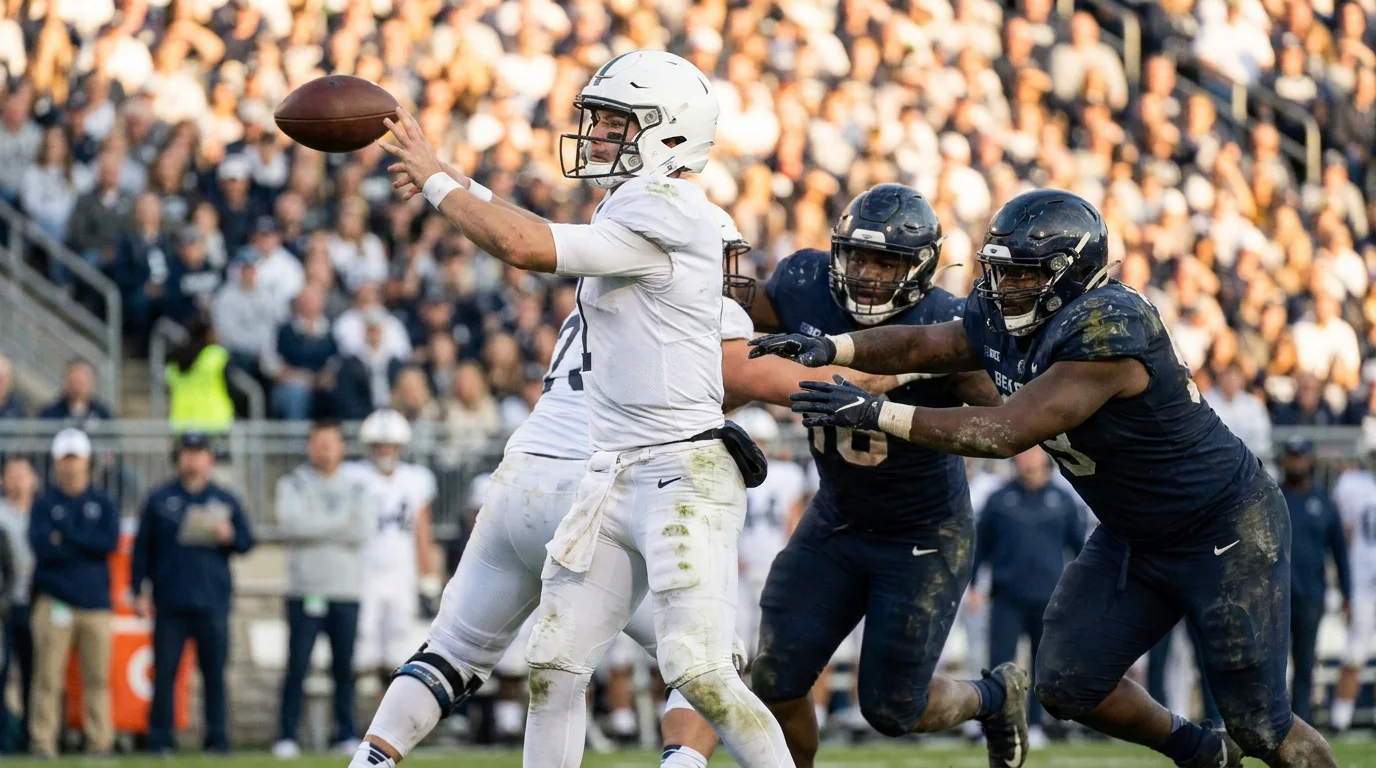
The first NFL prop ticket I ever placed was a passing-yards over on a Thursday Night game. The over hit by twelve yards. I thought I had cracked the code. Two weeks later I learned the truth: I had stumbled into a prop where the over hits more often than the under by structural design, not by skill. Roger Goodell once spoke about the passion and love for the NFL shown by millions of UK fans — and a slice of that passion arrives at exactly this market, the quarterback prop slip, every single Sunday. Online betting on real sporting events generated £596 million of GGY in Q4 2024/25 alone, and a meaningful share of that flowed through props rather than spreads.

The QB prop card is where UK punters from the football tradition first feel at home — yardage lines, touchdown overs, interception markets. The mechanics are roughly the soccer goalscorer logic with bigger numbers. The errors that punish UK punters here are different from the errors that punish them on spreads, and the path to understanding starts with the passing-yards market.
The Passing-Yards Market Is Where Beginners Get Comfortable Too Quickly
Passing yards is the headline QB prop on every UK board, and it is also the market where the modelling is most refined. Books set the line tight, and the public flows almost universally toward the over. The result is a market where the over price gets pushed shorter and the under offers more theoretical edge — except the under is the harder bet to win because game script tends to favour passing volume.
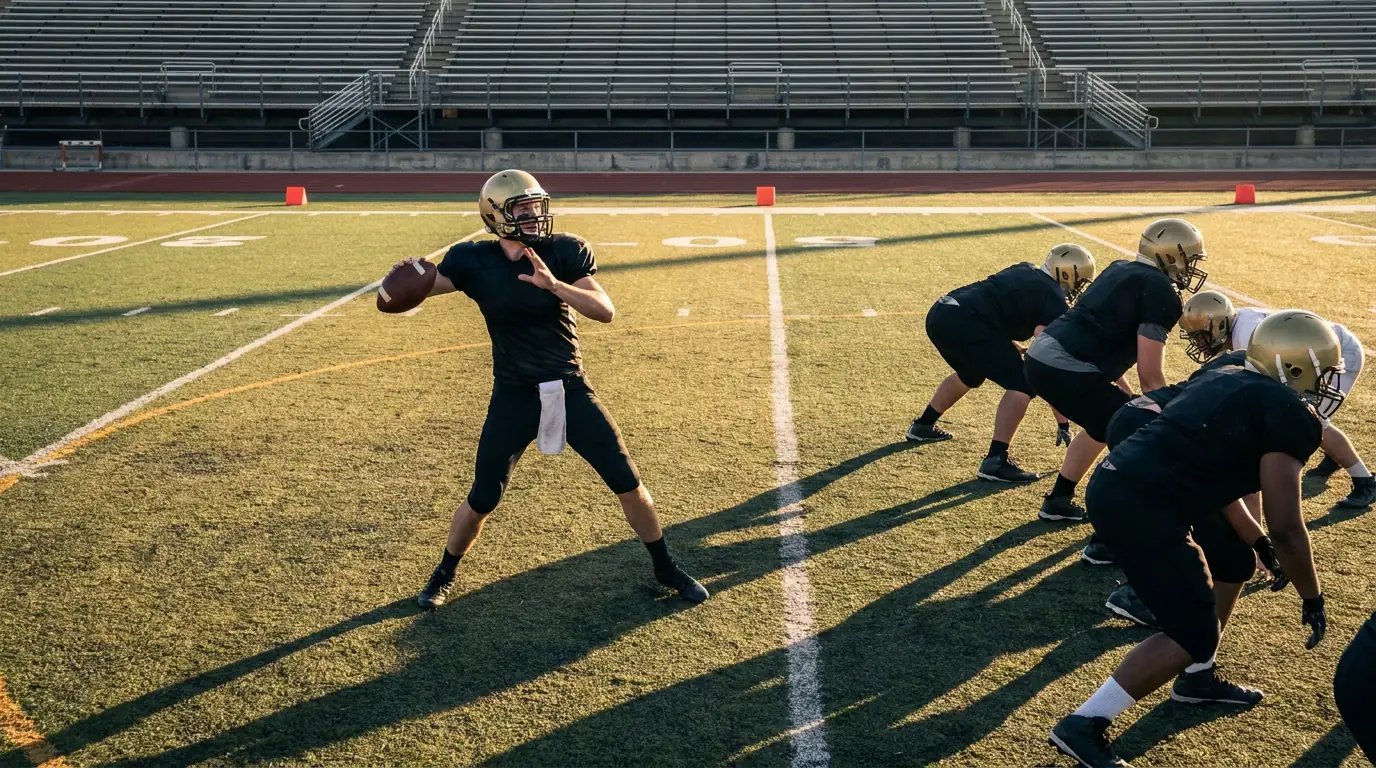
For a starting quarterback, the typical passing-yards line sits in the 235-285 range, with workhorse passers in the 290-310 band and run-first offences in the 200-230 zone. The line is roughly the player’s season average rounded to the nearest five, then adjusted for opponent strength, weather and projected game script. A team trailing by ten in the second half passes more, not less. A team ahead by ten passes less. The line is set before the game script reveals itself, which is why the live market on passing-yards adjusts so aggressively across the second quarter.
The pricing pattern is consistent. Passing-yards overs at -115 to -120 are normal because public bias is real. Unders at +100 or better appear regularly and are not the gift they look like. Backing the under on a high-volume passer requires a specific reason: a weather forecast, a defensive matchup that produces sacks rather than coverage wins, or a game-script lean toward run-heavy ball control.
The Passing TDs Line Is Half-Point Hell
Passing touchdown markets in the UK come in two formats — half-point lines like 1.5 or 2.5, and over/under propositions priced as alternates. The half-point format is the cleaner of the two, and the line typically sits at 1.5 for game managers and 2.5 for elite passers.
The hidden trap with passing-TD props is correlation with the team total. A quarterback projected to throw 2+ touchdowns is implicitly a quarterback whose team is projected to score 24+ points. The two outcomes are not independent — backing the QB TD over and the team total over is roughly backing the same thing twice. UK punters who build same-game multis often stack these legs without realising the bookmaker has already priced the correlation into the odds, removing the apparent value.
The bet that actually offers value is the QB TD over on a quarterback with strong red-zone splits whose team is favoured by 3-6 points. The 3-6 spread implies a competitive game that finishes 27-21 or thereabouts, which is the exact game script that produces multiple passing touchdowns. The TD over plus 7 spread is a more correlated bet, but the spread is shorter, so the joint value is similar.
The Interception Overs Almost Nobody Wins
Interception overs are a tempting market because the line sits at 0.5 or 1.5 and the upside is meaningful at +200 or longer. The trap is that interceptions are among the most random outcomes in football, and the over on an interception prop is a bet on randomness in your favour rather than a bet on a tendency.
Across the past decade, starting quarterbacks have averaged roughly 0.7-0.9 interceptions per game. That makes the 0.5 over a roughly 55-60% proposition at fair odds, but the line is rarely priced at fair odds — the over is typically -120 to -140, which closes the edge. The 1.5 over is a roughly 20-25% proposition and is priced at +200 to +280, again roughly fair with a small house margin.
The genuine edge in interception markets is the under on quarterbacks with elite ball security against soft pass defences, particularly in domes. Aaron Rodgers in his prime threw fewer than 0.5 interceptions per game across multiple seasons. Backing the under at -180 on a QB-defence pairing where the priors point that way is the closest thing to a structural edge on this market.
The Longest Completion Prop Is the Best UK Prop You Are Not Betting
Longest completion is a market that flies under the UK punter radar and contains genuine edge. The line is set in the 38-46 yard zone for most starters, and the distribution of longest completions is heavily skewed by a single big play that may or may not happen in any given game.
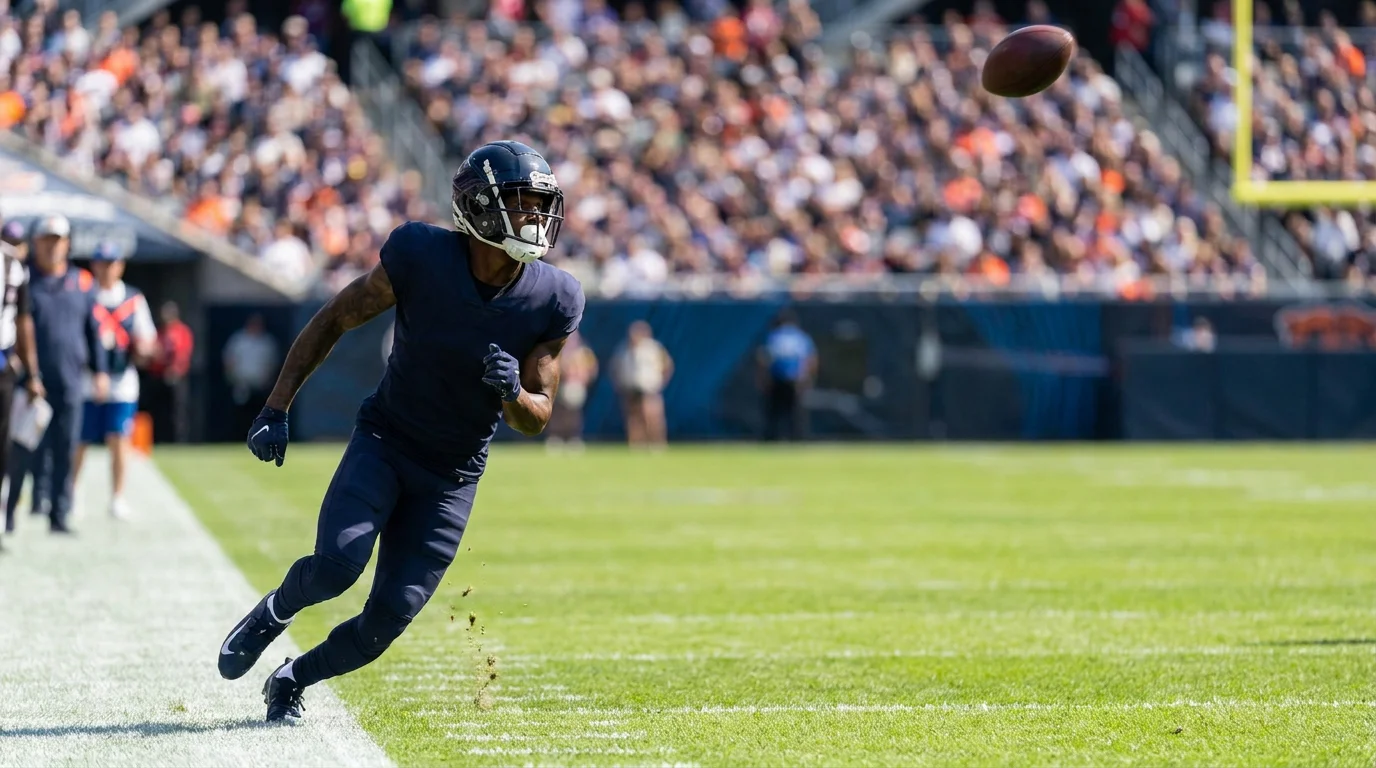
The mathematics are unusual. A quarterback’s longest completion across a season averages perhaps 42-48 yards, but the median is closer to 38-40. The line tends to sit above the median, which makes the under the slight favourite — but the over is the bet that pays when a single deep shot connects. The pricing typically shows the over at +110 to +130, which is fair value before factoring in pass-catcher quality.
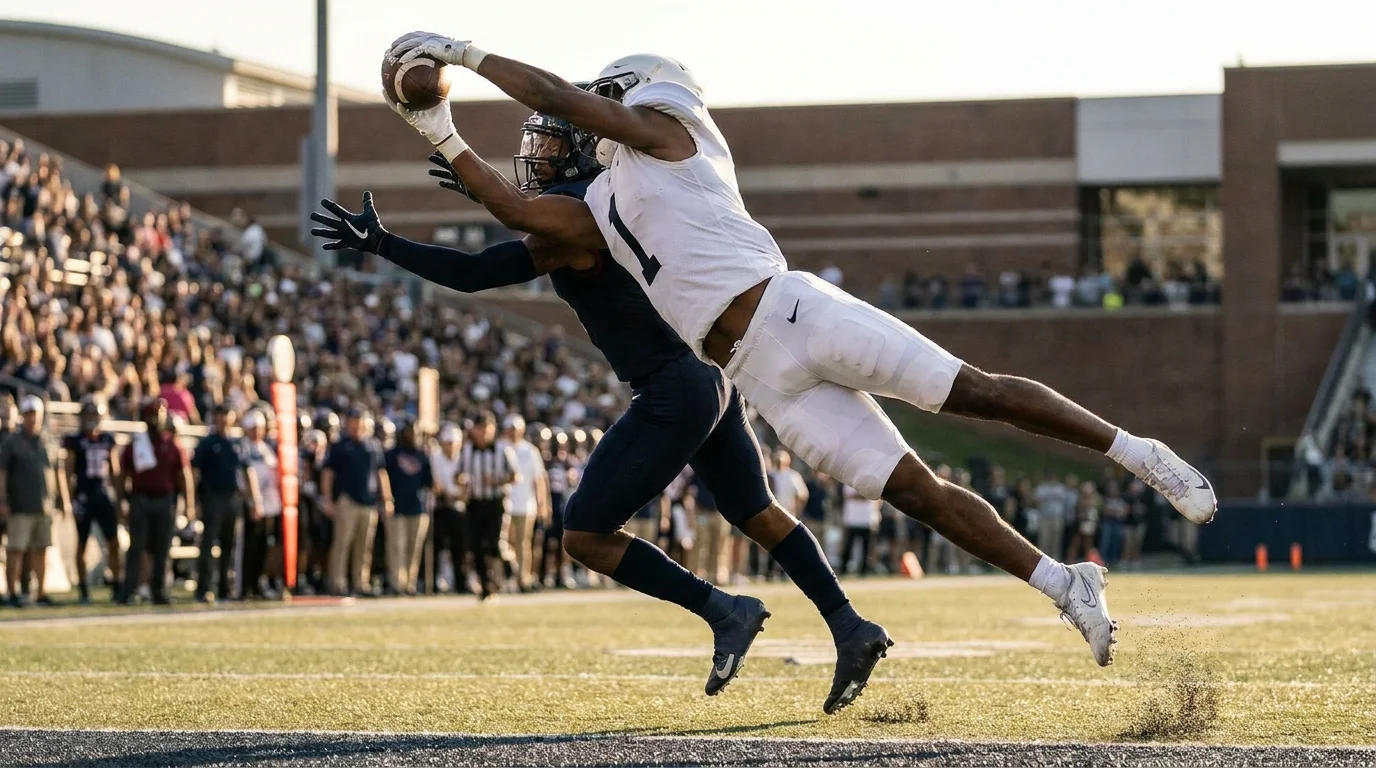
The bet I look for is the longest completion over on a team with a vertical receiver — a deep-threat WR — playing a defence that gives up explosive plays. The combination produces a hit rate well above the implied probability of the line. The Cincinnati Bengals with Ja’Marr Chase, the Miami Dolphins with Tyreek Hill, the Eagles with A.J. Brown — these are the exact pairings where the longest completion over has provided positive expected value across multiple seasons.
Game Script Is the Most Important Word in Quarterback Props
Game script is the projected flow of a match — which team leads, when they lead, and how much they lead by. It is the single most important driver of QB prop outcomes, and the UK punter who learns to read game script before placing prop bets immediately moves into a different bracket.
The mechanics work like this. A team trailing by two or more touchdowns enters pass-first mode, which inflates every passing prop. A team leading by two or more touchdowns enters clock-killing run mode, which suppresses every passing prop. The line is set before the game script reveals itself, but the game script is partly forecastable from the opening spread and total.
An eight-point favourite at home with a 47.5 total is projected to win by roughly a touchdown in a moderately scoring game. The favourite’s QB is implicitly forecast to throw for around 240 yards and 1.5 touchdowns — typical for a controlled win. The underdog’s QB is projected to throw for 270 yards and 1.5 touchdowns — more volume because of the trailing game script. A UK punter shopping for QB prop edge should look first at the underdog’s passing-yards over, because the line is often set conservatively despite the game-script tailwind.
The same logic in reverse explains why backing the favourite’s QB on yardage overs in big spreads is a low-edge play. The math is against you the moment the team takes a lead.
The receiving side of the same matchup — where the WR and TE prop lines hide most of the live edge on passing-game props — gets the full UK treatment in the cluster on how UK punters price receiving yards and target share.
Why does the passing-yards over hit more often than the under?
Two reasons. First, books shade the line slightly toward the over because public money flows that way, which means the implied probability of the over is structurally higher than 50%. Second, modern NFL game scripts favour passing volume — trailing teams pass more aggressively than leading teams run aggressively, and most games produce at least one team trailing for a meaningful stretch. The combination means the over wins roughly 53-55% at the line, but the price is typically -115 to -120, which strips most of that edge. Picking spots where game script is genuinely tilted in the over’s favour is what separates a winning approach from chasing the public side.
How do live game scripts move QB props?
Dramatically. A passing-yards line set at 265 pre-game can move 15-25 yards in either direction across the first half once the game script reveals itself. If the favourite leads 14-0 at halftime, the favourite QB’s live over price gets noticeably shorter, while the underdog QB’s live over price gets longer despite the QB now being in heavy passing mode — the books are pricing the volume that has not yet happened against the volume that has. Live prop betting on QBs is more about reading whether the books have over- or under-corrected to the score than predicting any individual play.
