
 Available in US
Content

The Team That Has Tested My Discipline
Scott Loft of the Jacksonville Jaguars noted in a Seat Unique release this year the depth of fan engagement now found across the UK NFL ecosystem, and the Buffalo Bills have built one of the more surprising followings inside that ecosystem. The team is not based in London, has not played a London game, and was an afterthought in UK markets a decade ago. Today its Super Bowl future is one of the most heavily traded outright bets I see on UK boards. The American Gaming Association estimated $23.1 billion in handle on Super Bowl LVIII alone, with roughly 68 million US adults planning to bet — and a meaningful slice of UK futures volume traces back to teams that, like Buffalo, have built playoff narratives without quite delivering the trophy.

I have backed the Bills’ Super Bowl future at three different prices across three different offseasons. None has cashed. The fourth attempt is the one I am writing through here, and the question is not whether to back the team — the question is at what price the back is justified.
Roster and Coaching Context
The Bills under their current coaching staff and front office have built a roster designed around a generational quarterback, a strong offensive line, and a defence that fluctuates between top-five and top-fifteen depending on the year and the injury list. The roster construction is unusually consistent — meaningful continuity year over year, few major free-agent departures, draft strategy focused on depth at premium positions.
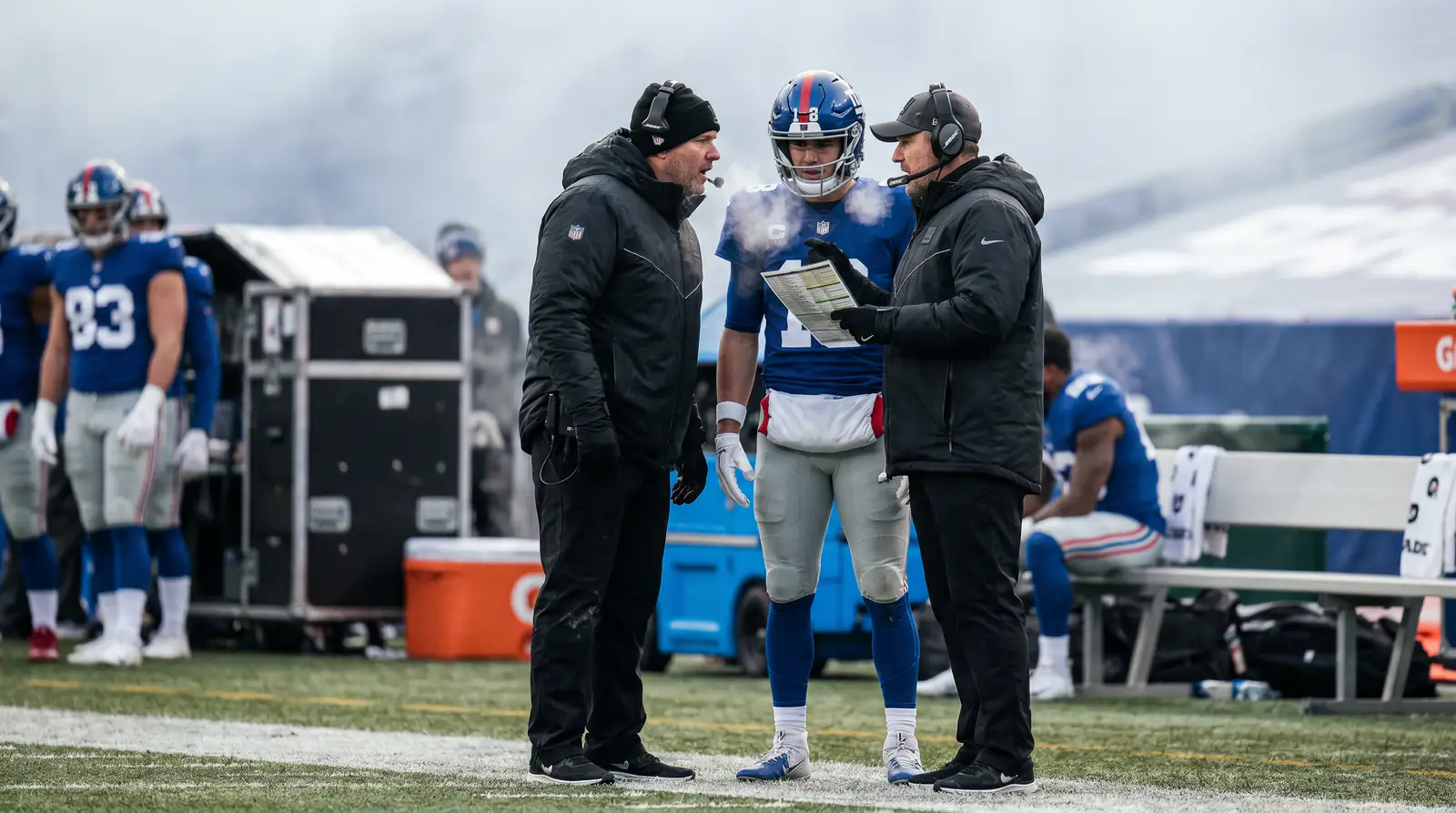
What this consistency does for the futures market is anchor the team’s pricing at a relatively stable level across the offseason. Buffalo opens the Super Bowl futures market in the 8/1 to 14/1 range almost every year. Bad teams open at 50/1 plus and good teams open at 5/1 or shorter. The Bills sit in the persistent contender tier, where the price is too short to be a bargain and too long to be a public favourite.
The MVP overlay matters here. Allen’s regular-season production has made him a perennial top-three MVP candidate, and the implied probability of the Bills winning the Super Bowl is partially baked into Allen’s MVP price. The two markets correlate, which is why backing one and laying the other rarely makes sense for a UK punter.
The Divisional Path
The AFC East has historically been the Bills’ easiest path through the regular season, with division rivals oscillating between rebuild years and brief contention windows. Across recent years, the Bills’ divisional record has been a primary driver of their seeding and therefore their playoff path. A first-round bye is structurally worth somewhere between 0.5 and 1 standard playoff win; home-field advantage through the AFC bracket is worth more.

The pricing implication is that the Bills’ Super Bowl future is partially a bet on AFC East dominance combined with a coin flip in the conference and another coin flip in the championship game. Strip the divisional outcome out and the team’s Super Bowl probability looks more modest than the headline price suggests. Add it back in and the price looks defensible if you believe the AFC East will remain weak.
The AFC seeding bias is one of the more interesting things about the price. The Bills’ Super Bowl odds shorten meaningfully if Cincinnati, Baltimore or Kansas City have a slow start to the season. They lengthen meaningfully if any of those teams open at a 5-1 pace. UK punters tracking the Bills’ future should watch the rival contenders more closely than the Bills themselves.
Allen and the MVP Overlay
Josh Allen’s MVP price typically opens shorter than his statistical profile would justify, like every elite quarterback whose narrative profile has caught up to his production. UK punters have backed him for MVP at preseason prices that reflect roughly a 15-20% implied probability, against an honest fair value closer to 12%. The price is short because the narrative is loud.
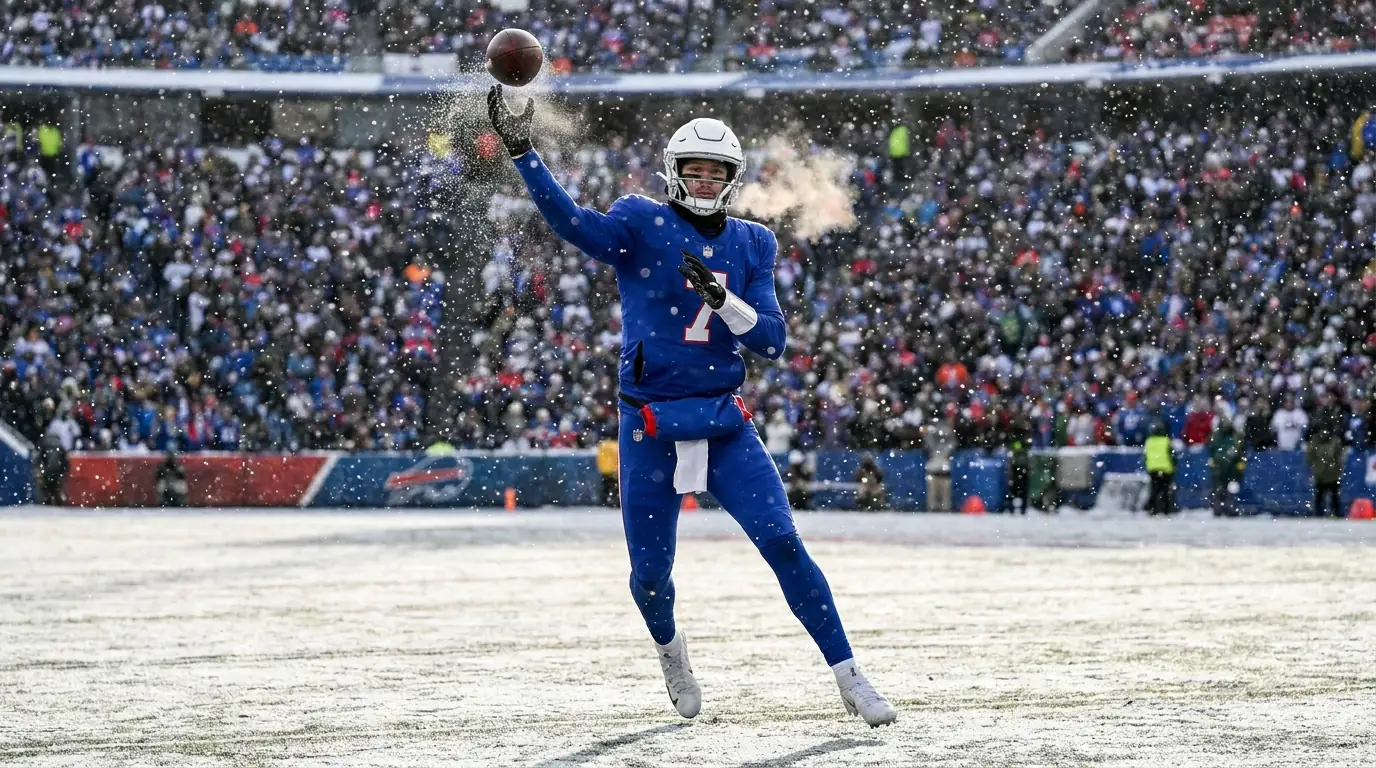
The relevant question for a Bills futures bet is the correlation between Allen’s MVP and the team’s Super Bowl outcome. Historically, MVP winners have not consistently delivered Super Bowl championships — Allen’s potential MVP season would be a positive signal for Buffalo’s deep playoff run but not a guarantee. The two outcomes correlate at perhaps 60% rather than 90%. That partial correlation matters when sizing a Bills Super Bowl bet relative to an Allen MVP bet.
For a UK punter backing the Bills’ Super Bowl future, the Allen MVP bet is not a hedge — it is a parallel exposure to broadly the same outcome. Sizing both bets at the same level effectively doubles the exposure to one underlying scenario.
Injury Risk Discount
The single biggest factor I underweight on futures bets, and one I have learned to take more seriously, is injury risk to a team’s defining player. Allen has been durable across his career — meaningfully more so than most starting quarterbacks — but the tail risk of a five-week absence in October is non-trivial for any quarterback.

When the Bills’ Super Bowl future is priced at 10/1, the implied probability is roughly 9%. Of that 9%, perhaps 1-2% is wiped out by the chance of an Allen injury that ends the season’s Super Bowl candidacy. The market does not always discount this risk fully, especially in preseason pricing where injury concerns are abstract. By Week 8, the discount is more fully priced. A Bills future bought in preseason at 9/1 carries more injury tail risk than the same future bought at 11/1 in late October after the season’s early injury news has cleared.
The lesson is timing-related. Backing the Bills’ Super Bowl future after a clean health report through Week 5 or 6 is, in expected value terms, a stronger bet than the same price would have been in March, because a chunk of the injury risk has been resolved without cost.
Hedging Strategy
If the Bills reach the conference championship game with a Super Bowl future ticket in your pocket, the hedging question becomes concrete. Allen and Buffalo head into the AFC title game at, say, 6/4 moneyline. The bet would be backing their opponent at 4/6 to lock in a guaranteed payout.

The maths is uncomfortable. A fair-priced hedge surrenders all the upside in exchange for certainty. A 6/4 versus 4/6 spread carries the usual UK vig, so the hedge actually loses a small percentage of expected value relative to letting the ticket ride. The case for hedging is psychological rather than mathematical — locking in a known win versus accepting a 60% chance of a larger win.
I have hedged once across multiple Bills future bets. The team did not reach the Super Bowl that year and the hedge paid out cleanly. The other times I have held the ticket through the conference final, the team has lost in that round. The hedge would have paid in those cases too. The pattern is not a coincidence — the conference championship is where contender futures most often die — but the right hedge call depends on bankroll size more than on any predictive insight.
The broader Super Bowl LX outright and live market context — including the dimensions of the futures book and how UK pricing differs from US pricing — sits in the main cluster on Super Bowl LX outright and prop markets from a UK angle.
What price on the Bills is a fair entry?
Anywhere from 9/1 to 14/1 in offseason or early-season trading, depending on the broader AFC contender landscape. Below 8/1 the team is being priced as the conference favourite, which is rarely justified given the depth of the AFC. Above 16/1 the team is being undervalued, which usually requires either a major injury concern or a roster turnover the market has overreacted to. The 9/1-14/1 zone has been the most consistent value entry point in recent years.
Is Allen’s MVP price tied to the Bills’ Super Bowl number?
Partially. The two markets correlate at roughly 60% — an Allen MVP season is a strong positive signal for the Bills’ deep playoff run, but not a guarantee. Sizing both bets at the same level effectively doubles exposure to one underlying scenario, so disciplined bankroll management treats the two bets as parallel rather than diversified.
