
 Available in US
Content
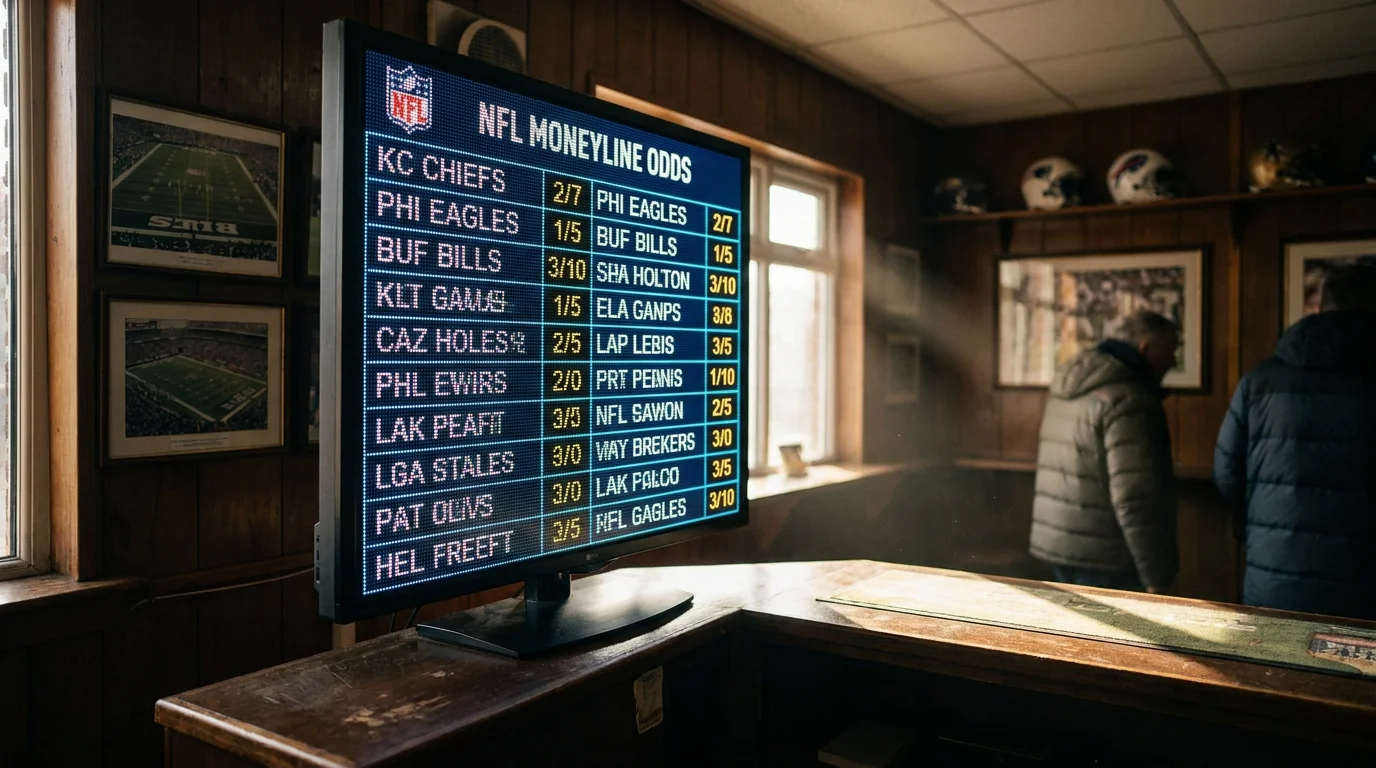
The Ugly Price That Sometimes Prints
I spent my first NFL season refusing to bet moneylines on favourites. Anything shorter than even money looked like robbery to a punter raised on Premier League prices, where a 1/3 favourite is the kind of bet your dad tells you not to bother with. Then I tracked every moneyline I had passed on at minus 200 or shorter across that season and discovered, somewhat painfully, that I had walked away from money. Not a fortune. But a steady, boring, deeply unfashionable little river of it.
The moneyline is the simplest bet in the NFL marketplace and the one British punters most often mishandle. It pays out on the matchwinner, full stop, no spread, no over-under, no asterisk. The whole game depends on one thing – did the team I backed win? – which makes it both the easiest market to understand and the hardest to extract value from, because everyone else understands it too.

How the Moneyline Is Priced
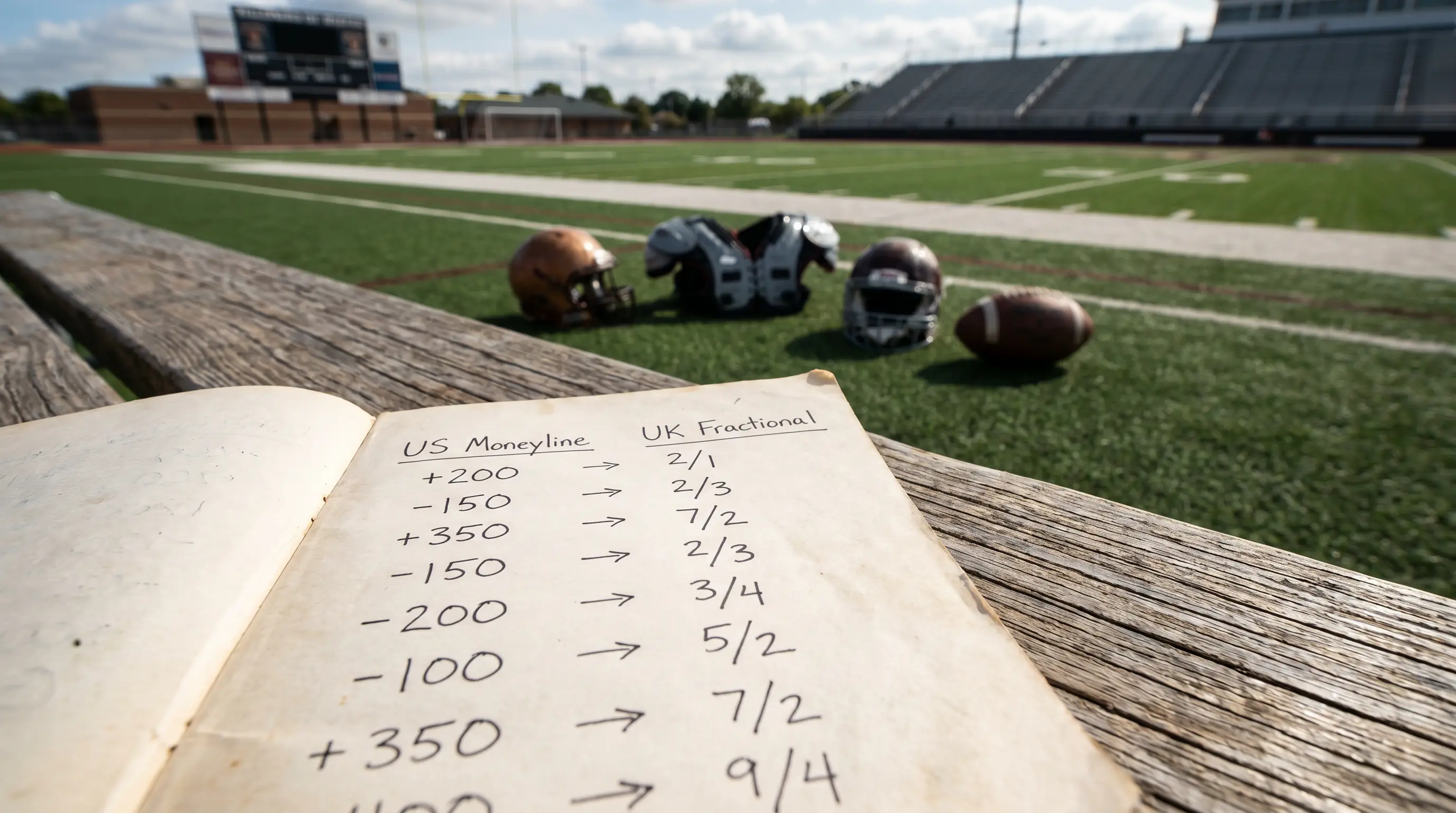
Take any NFL game and a bookmaker quotes you two numbers. The favourite is priced with a minus sign in American odds or a short fractional in UK terms: minus 250, or 2/5. The underdog gets a plus sign or a long fractional: plus 210, or 21/10. Both prices are baked from the same implied probability that drives the spread, but with the books’ margin folded in twice – once on each side.
The maths are simple enough. A minus 250 favourite implies roughly a 71% chance of winning before the vig. A plus 210 underdog implies roughly 32% before the vig. Together they total 103%, and that 3% is the bookmaker’s hold. The closer the game is priced, the smaller the vig in absolute terms; the more lopsided the game, the more aggressively the favourite is taxed.
This is why moneyline value behaves nothing like spread value. On the spread, both sides are usually priced around 10/11 and the variable is the number. On the moneyline, both sides win or lose the same number of games – the bet on the favourite, the team that wins outright more often – but the price you pay swings wildly with how lopsided the game is. The 8% of UK adults betting on sport and racing online during Wave 3 of the GSGB in late 2025 are mostly punting moneylines whether they realise it or not, because every accumulator leg is, fundamentally, a moneyline call.
The Heavy Favourite Trap
Anything shorter than minus 300 in NFL is a trap that has eaten countless bankrolls. Here is why. A minus 300 price asks you to risk three units to win one. To break even on that bet over the long run, the favourite must win 75% of the time. NFL favourites at minus 300 do win often – but not 75% of the time, and certainly not after you factor in the vig that pushed them from a fair price of minus 280 to a posted price of minus 320.
The deeper problem is psychological. A minus 350 favourite feels like a lock. Most weeks it cashes. You bank a small return, feel smart, and increase your stake the following week. Then a backup quarterback throws a pick-six in week three, the heavy favourite loses by four, and three weeks of profit vanish in an afternoon. The variance of NFL is brutal at the top end of the favourite scale, and the price you are getting almost never compensates for it.
I have a personal rule: I do not bet moneylines shorter than minus 200 as standalone wagers. Below that price, the asymmetry between the wins (small) and the losses (catastrophic) does not justify the risk for a recreational bankroll. Sharps can play these spots when they have a documented edge. The rest of us are better off looking elsewhere on the card.
Parlays, Multis and the Math Behind Stacking Favourites
Where minus 200 favourites earn their keep is inside an accumulator. Stack four moneyline favourites priced at minus 200 each and your acca pays roughly 4/1. Hit all four and a £20 stake returns around £100. Lose any one and you collect nothing.
The maths here is unforgiving. Each minus 200 leg implies a 67% chance of winning. Four legs at 67% each multiply out to a 20% chance of clearing the whole bet. Your 4/1 price needs roughly 25% true probability to break even after vig. You are losing about 5% of expected value to the bookmaker on every four-fold of this shape, every single time, regardless of which teams are involved.
That does not make parlaying favourites stupid. It makes it a recreational bet you should size accordingly. I treat accas of this kind as entertainment money – a small fixed stake on a Sunday slate, no more than 1-2% of my weekly bankroll, with full acceptance that the long-run expected value is negative. If you want to chase positive EV through parlays, the route runs through correlated same-game multis rather than stacking unrelated heavy favourites.

The Underdog Moneyline Spots Worth Hunting
The other end of the price scale is more interesting. A plus 210 dog wins outright more often than most British punters expect, because NFL games are won or lost by single possessions far more often than Premier League fixtures are. Roughly one in three NFL games this decade has been decided by three points or fewer. When the spread is six points and the moneyline is plus 240, the dog only has to lose by less than seven – or win outright – and you pocket roughly two-and-a-half to one.
Two patterns I look for specifically. First, division dogs in the second half of the season, when familiarity tightens up games that the early-season models had pegged wider. Second, home dogs of 3 to 6 points coming off a bye week, where the favourite is travelling and the underdog has had two weeks to prepare. Neither pattern is foolproof. Both have generated more profit in my records than chasing minus 350 favourites ever has.
The key with underdog moneylines is sample size discipline. You will lose four or five in a row. The price compensates you for that. If you cannot sit through a losing streak without doubling your stake or abandoning the approach, this is not the corner of the market for you.
Staking Moneylines Without Going Bust
Bankroll rules matter more on moneylines than anywhere else in NFL betting, because the price swings are so much wider than on spreads or totals. A flat one-unit stake at minus 110 risks 1.1 units to win 1. A flat one-unit stake at minus 400 risks 4 units to win 1. Treat those as equivalent and your variance is wildly different.
My approach: stake to win a fixed amount on minus-money favourites, not to risk a fixed amount. If my unit is £10 of intended profit, then minus 200 means a £20 stake and minus 400 means a £40 stake. On underdogs I flip it – fixed risk, variable reward – because the dollar exposure is bounded and the upside is what I am paying for.
The point is that one rule should not apply to both sides of the moneyline. Different bet shapes need different stake mechanics. Treat your favourites and your dogs as two distinct portfolios and your week-to-week swings calm down considerably.

Moneyline arithmetic is closely tied to how the spread itself is priced. If you want to dig into why home underdogs cover the spread profitably even when their moneyline price feels too long, the underdog spread cover patterns I track each week are the natural next read.
When does a minus 350 moneyline ever offer value?
Almost never as a standalone bet. The price is asking you to win 78% of the time just to break even, and NFL variance – backup quarterbacks, weather, special teams – pulls even elite favourites below that threshold over a long sample. The only time I will touch a minus 350 is as a small leg inside a larger correlated bet, never as a flat single.
Is the moneyline always worse than the spread for favourites?
Not always, but usually for casual punters. The spread offers a built-in cushion priced near even money. The moneyline asks you to pay for the certainty of just needing the win, and books charge handsomely for that certainty. Where the moneyline beats the spread is when the favourite is likely to win by exactly the spread number, since a push on the spread returns your stake while the moneyline cashes.
