
 Available in US
Content
- The framework before the football
- The UKGC licensing framework
- The 2025 statutory levy
- NHS clinics and the treatment landscape
- PGSI and prevalence in the UK
- Young bettors and the smartphone problem
- GAMSTOP and what it actually does
- Deposit and stake limits inside the operator
- Operator tools beyond the limits
- Affordability checks: what to expect
- Advertising and promotion rules
- Where to get help
- Frequently asked questions
- The bet inside the framework
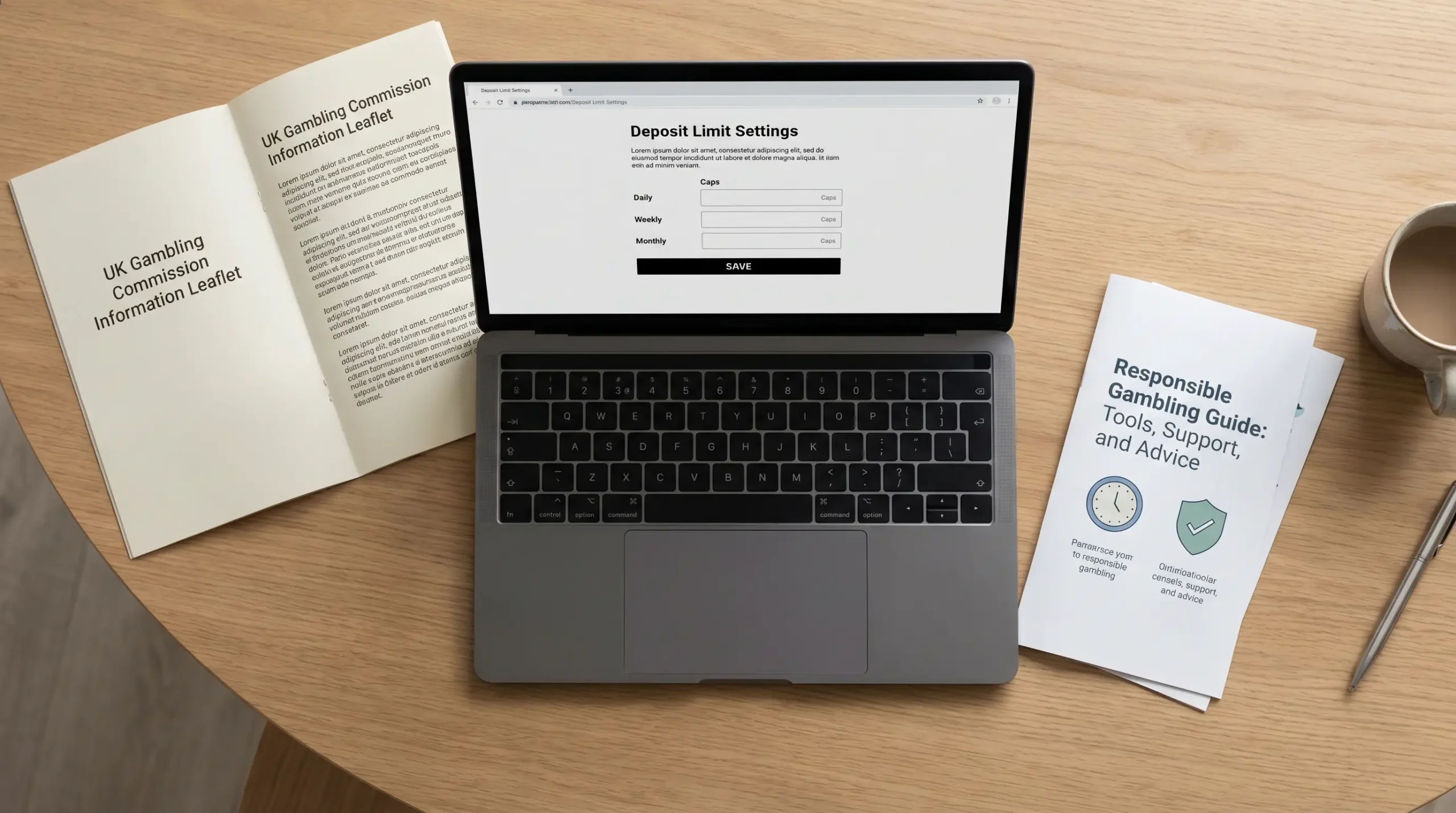
The framework before the football
I am going to do something here that the rest of the British NFL betting internet seems unwilling to do: I am going to talk about the regulatory and harm-reduction framework before I talk about the football. Around 0.4% of adults in England score 8 or above on the PGSI scale, which is the conventional cut-off for problem gambling. Another 1.6% sit at PGSI 3+, the moderate-risk band. Those numbers are small as percentages and very large as people, and they are the reason this article exists in the structure it does.
The point of this guide is not to lecture. The point is to give a working UK NFL bettor an honest map of what protects them, what costs them, and what the system requires of them — so that the betting itself can happen inside a framework rather than against one. The framework is more interesting than most British punters realise, and 2025 was the year it changed in ways that will shape the next decade.
The UKGC licensing framework
Every legal NFL bet placed in Britain runs through an operator licensed by the Gambling Commission. There were 8,234 licensed gambling premises and 5,825 betting shops operating in the year to March 2025, alongside the major online operators, and all of them sit under the same regulatory umbrella. The licence is not a courtesy or a marketing badge — it is the legal precondition for offering odds to a British resident, and it carries enforceable obligations around technical standards, complaints handling, anti-money-laundering, and consumer protection.
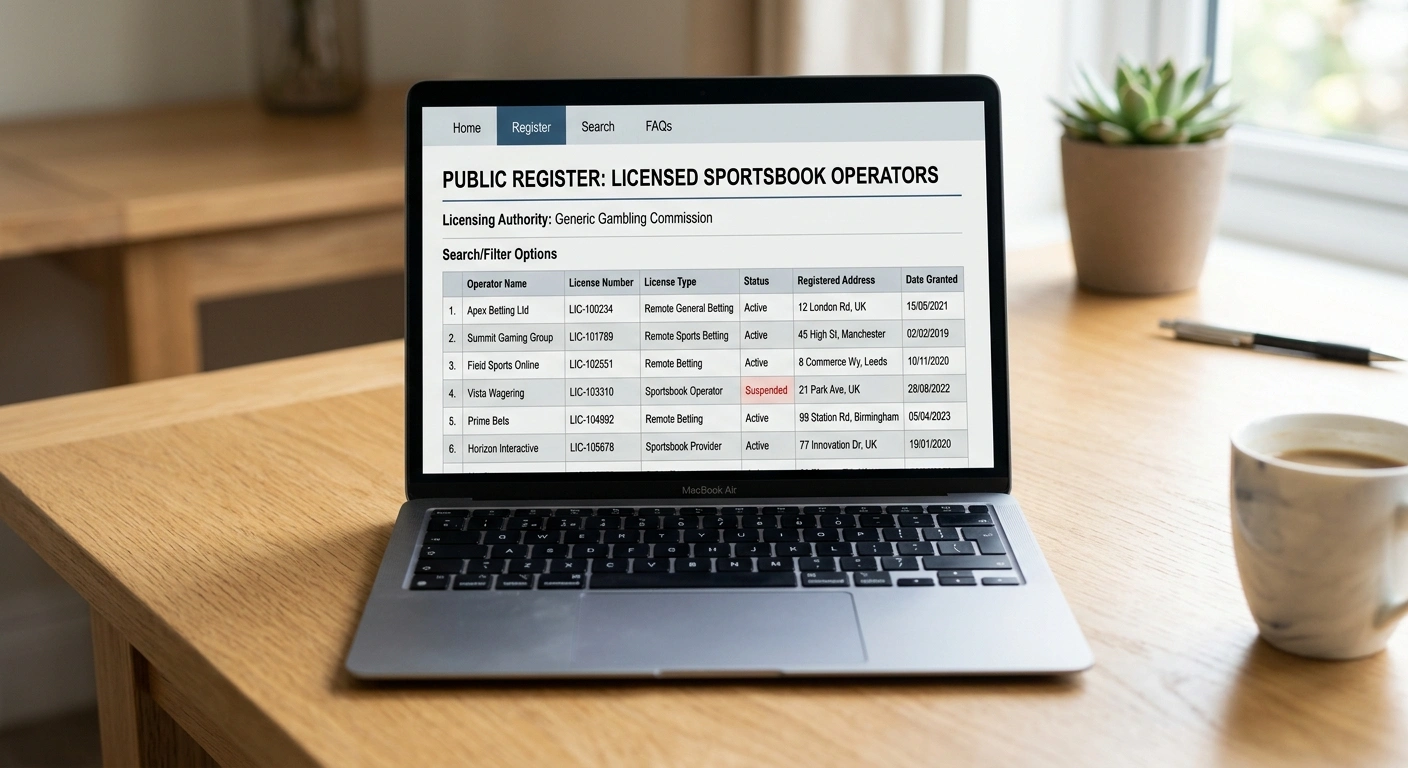
For a punter, the practical implications of UKGC licensing are tangible. Disputes with a licensed operator can be escalated to an independent ADR (alternative dispute resolution) service. Funds in your account are protected under operator licence conditions, with the level of protection disclosed in the terms. Marketing rules constrain what bonuses the operator can offer, how they can advertise to vulnerable groups, and which markets they can promote.
The UKGC publishes its enforcement actions publicly, and the penalty roster across 2024 and 2025 makes for sobering reading. Major operators have been fined tens of millions of pounds for failures in source-of-funds checks, marketing to self-excluded customers, and inadequate affordability monitoring. The fines are not a sign that the system is broken. They are a sign that the system is enforcing rules that were quietly ignored for the better part of a decade, and that the bar for compliance is now genuinely higher than it has ever been.
The single most useful check a UK punter can perform before depositing with any sportsbook is to look up the operator on the UKGC public register. If the operator is not on the register, do not use it. The non-GAMSTOP “international” books that advertise to British residents are operating outside the UKGC framework, and the consumer protections you take for granted at a licensed book do not apply.
The 2025 statutory levy
The Gambling Levy Regulations 2025 came into force on 6 April 2025 and represent the single largest change to the UK gambling regulatory framework since the 2005 Gambling Act. Online operators pay a statutory levy of 1.1% of gross gambling yield to fund research, prevention, and treatment of gambling harms. The minimum rate across all operator categories is 0.1%, with online operators carrying the highest band. The first statutory payment was due by 1 October 2025 for the financial year 2025-26.
The levy is paid by operators, not directly by punters, but the money has to come from somewhere — and the somewhere is the margin built into the prices on the slip. The levy represents a watershed moment: a significant uplift in the investment dedicated to this area; greater government oversight; and a renewed commitment to further understanding, tackling and treating gambling harms,
said Baroness Twycross, the Parliamentary Under-Secretary at DCMS, during the parliamentary passage of the regulations.
Where the levy money goes is the structurally interesting part. It is distributed through commissioning bodies — UK Research and Innovation for research, GambleAware and successor organisations for prevention, and NHS England for treatment — under a framework that for the first time gives statutory authority to public-health bodies rather than industry-funded charities. NHS England formally took over operational control of treatment funding in 2025, which is a meaningful shift away from the voluntary-contribution model that preceded it.
The full implications of the levy on UK punters — through promo budgets, through line pricing, through marketing constraints — are unfolding through 2026 and beyond. A detailed walkthrough of what the 2025 levy means for punters covers the second-order effects in depth. The headline implication for an NFL bettor is that the system is now better-funded, more independent of operator goodwill, and more accountable than the voluntary structure it replaced. Whether that translates into measurably lower harm rates will take several years of data to assess.
NHS clinics and the treatment landscape
The NHS gambling harms treatment infrastructure expanded materially across 2024 and 2025. There are now 15 specialist NHS clinics for problem gambling across England, and service usage rose by approximately 130% in the year to March 2025. Referrals to specialist clinics hit 1,914 in a six-month period — more than double the 836 referrals across the equivalent prior period.

What these figures actually tell you depends on which lens you use. The increase in referrals could mean rising prevalence of gambling harm, or it could mean improving recognition and pathways to help that were not available before. The likeliest interpretation, given that the underlying PGSI prevalence data has been broadly stable, is the latter — more people are getting help because the help finally exists.
NHS England’s formal assumption of statutory levy management in 2025 puts the treatment system on a permanent footing for the first time. The clinics are commissioned through Integrated Care Boards, integrated with primary care referral pathways, and accessible without an NHS GP referral in most regions. The system is not yet at the scale it needs to be — waiting times in some regions remain meaningful — but the trajectory is upward and the funding model is now stable.
For an NFL bettor specifically, the treatment infrastructure is something to be aware of rather than something to use. The vast majority of UK punters bet within their means and never encounter problem behaviour. But if the pattern starts to shift — chasing losses, betting more than planned, hiding bets from people who matter — the existence of free, NHS-delivered specialist treatment is a meaningful fact that did not exist a decade ago.
PGSI and prevalence in the UK
The Problem Gambling Severity Index — PGSI — is the standardised nine-question screening tool used across UK research to identify gambling harm. The bands run from 0 (no risk) to 8+ (problem gambling), with 1-2 representing low risk and 3-7 representing moderate risk. A score of 3 or above is the threshold that public-health bodies treat as a flag for further assessment.
The latest Adult Psychiatric Morbidity Survey put the share of English adults at PGSI 8+ at 0.4%, with 1.6% at PGSI 3+. These figures are broadly consistent with the longer-running prevalence estimates and are the numbers that the regulatory framework is calibrated to. The implication is that out of every 100 UK adults who bet, two or three are at moderate or higher risk of harm, even though the population-wide rate sounds modest.
The age-band data is more striking. Among 18-24-year-olds, 21.9% score between 1 and 27 on the PGSI scale, and 5.3% sit in the high-risk band of 8-27. Young adults are not a small percentage of UK NFL bettors — the audience skews younger than soccer betting — and the harm prevalence in that age band is roughly three times the population-wide rate. The age weighting of NFL betting interest in the UK makes the harm-prevention conversation more directly relevant to NFL than to most other sports.
The PGSI screen is publicly available — nine questions, takes under two minutes, scored on a 0-27 scale. For a UK bettor who wants to self-audit, working through it honestly once a season is one of the highest-value uses of two minutes you will find. The questions are about behaviour rather than amount, which is the right framing: harm is not about how much you bet, it is about how the betting fits into the rest of your life.
Young bettors and the smartphone problem
The most concerning trend in UK gambling data over the past several years is not adult prevalence — it is the youth participation rate. Around 30% of children and adolescents aged 11-17 spent their own money on gambling in the past 12 months as of 2025, a 3-percentage-point increase on 2024. Of that cohort, 1.2% show signs of problem gambling on the DSM-IV-MR-J screen for under-18s.

The 18-24 adult demographic shows the same pattern in higher resolution. 76% of UK adults aged 18-24 use mobile phones for betting — the highest mobile adoption of any age band — and 95% of UK online gambling overall takes place from home. The picture is of a young adult betting demographic for whom the slip is genuinely in their pocket all day, with none of the friction that physical betting shops impose on adult bettors above 40.
For NFL specifically, the demographic skew amplifies the structural risk. The British NFL fan is younger than the British soccer fan on average, more likely to bet via mobile, and more likely to use in-play markets that produce rapid stake-decision-loss cycles. None of that makes NFL betting harmful in itself. It does mean that the framework of harm-reduction — limits, breaks, self-exclusion — is structurally more relevant to NFL bettors than to a 55-year-old placing a Saturday accumulator at the high street.
The promising piece of the youth picture is that awareness and tooling have both improved sharply. The 11-17 conversation around gambling is happening in schools and in PSHE curricula in a way it was not five years ago, and the under-18 advertising restrictions that came in alongside the 2025 reforms close several of the loopholes that previously allowed gambling brands to reach minors through sports content.
GAMSTOP and what it actually does
GAMSTOP is the national self-exclusion scheme for online gambling in Great Britain. A single registration with GAMSTOP excludes the user from every UKGC-licensed online operator simultaneously for the chosen exclusion period — six months, twelve months, or five years. The system reached over 600,000 registrations by mid-2025, with around 525,000 active self-exclusions and a recent rate of approximately 100,000 new registrations every eleven months.

The structural feature that surprises many British punters is that GAMSTOP is all-or-nothing. You cannot self-exclude from “just NFL” or “just one operator” through GAMSTOP — the scheme covers every licensed online sportsbook, casino, bingo and lottery product as a single block. Operator-level exclusions exist as a separate tool, accessible through individual sportsbook accounts, and these can be more granular (specific product types, specific stake limits) but they only apply to the operator you set them with.
The GAMSTOP registration figures are sometimes cited as evidence of a worsening problem. They are more accurately cited as evidence of a working system. Such unprecedented growth in registrations indicates a widespread need for self-exclusion and highlights the crucial role of the gambling harm prevention, education, treatment and support sector,
the GAMSTOP statement on the 2025 figures put it. The fact that 525,000 people are actively self-excluded means that 525,000 people identified a problem, acted on it, and have a working barrier in place that prevents the harm continuing.
The most important detail about GAMSTOP for a UK punter to understand before they ever need it is that the exclusion period is binding. You cannot unwind it during the cooling-off period. Once you set a five-year exclusion, you are excluded for five years across every licensed operator in Britain. The system is designed this way deliberately — momentum-based decisions to “give it another go” after a heavy loss are the exact mechanism the exclusion is designed to interrupt.
Deposit and stake limits inside the operator
Below the GAMSTOP nuclear option, every UKGC-licensed operator is required to offer in-account tools that let users cap their own deposits, stakes, time on platform, and losses. These tools were patchy and inconsistently implemented as recently as 2022. They are now standardised, prominently placed, and require operator action rather than user research to surface.
The most useful of these tools, in my reading of how UK NFL bettors actually behave, is the deposit limit. Setting a weekly cap on what can move from your bank to your sportsbook account closes the single most common loss-chase mechanism — the late-Sunday “let me top up another fifty” decision that compounds a bad evening into a worse one. The deposit limit is honoured immediately on setup and can only be raised after a cooling-off period of at least 24 hours, which is the regulatory feature that gives it teeth.
Stake limits and loss limits are slightly less useful in practice, because they apply to a single session rather than to the longer-term pattern, and because they can be circumvented by moving between markets within a session. The honest assessment is that deposit limits at the bank-to-account boundary do more work than any other in-account tool.
Operator tools beyond the limits
The major UK sportsbooks now ship a range of harm-reduction tools beyond the headline limits — reality checks (periodic pop-ups telling you how long you have been on the platform), session timers, voluntary timeouts, and “cool-off” buttons that lock the account for a defined period. These tools sit inside the operator’s responsible gambling section, and they are designed to be one click rather than five.
The other operator-level tool worth knowing about is the affordability assessment. UK operators are required to monitor for signs that a customer is betting beyond their means, and the most common trigger for an affordability check is sustained deposit activity above a defined threshold. The threshold varies by operator and by the operator’s risk assessment of the individual customer, but the general principle is that significant escalation in deposits triggers a documentation request.
From the punter’s side, the affordability check feels intrusive — the operator asks for evidence of income, employment, or other source of funds, and may suspend withdrawals until the documentation is provided. From the regulatory side, it is the mechanism that prevents the operator from collecting £20,000 of losses from a customer who has, on documented evidence, no plausible way to afford £20,000 of losses. The two perspectives both have merit, and the regulatory direction of travel is firmly toward more documentation rather than less.
Affordability checks: what to expect
Around 13.5m UK online gambling accounts are active each month, and a small but growing share of them trigger affordability documentation requests in any given quarter. The documentation typically requested includes payslips, bank statements, P60s, or evidence of self-employment income. The operator will give you a defined window to provide it, and will suspend new deposits (and sometimes withdrawals) until the documentation is reviewed.
For a UK punter who bets within their means, the affordability check is a brief administrative interruption. For a punter who has been depositing beyond their means, it is the regulatory mechanism that closes the position before the losses compound further. The check is not a marketing exercise — it is a legal obligation on the operator that, if neglected, generates the substantial UKGC fines mentioned earlier.
The single most useful thing a UK NFL bettor can do about affordability is to bet at a unit size that would still be affordable if the bank required two weeks of statements tomorrow. If your stake size embarrasses you to think about, it is too large.
Advertising and promotion rules
The UK advertising framework for gambling tightened across 2023-2025 in ways that change what NFL bettors will see on TV, in stadiums, and on social media. Online slots are the highest-risk gambling product. They have the highest rate of binge play and the highest average losses of any online product. In the past five years, this yield has grown by 61% and growth is not slowing down,
said Baroness Twycross during the parliamentary debate on the regulatory package. The slots reference is not incidental to NFL — the same operators who run slot products also run sportsbooks, and the regulatory pressure on slots advertising flows back to constrain promotional behaviour in adjacent markets.
For NFL bettors specifically, the practical effects are: lower TV advertising volume during games (the whistle-to-whistle restrictions during live sport are now industry standard), no shirt-front gambling sponsorship on Premier League shirts from the 2026-27 season onward (and gradually across other professional sports), and tighter rules on bonus promotion to existing customers based on their betting patterns.
The promotional offers themselves have shrunk in headline value as the levy and the affordability framework have constrained operator margins. The “bet £10 get £30” offers that defined the UK sportsbook market in 2018 are smaller and more conditional in 2026, with wagering requirements that materially reduce the effective value of the free bet.
Where to get help
If your NFL betting — or any betting — has started to feel like something you are no longer in control of, the UK help infrastructure is genuinely good and genuinely free. The starting point depends on what you want. If you want to put a hard barrier in place immediately, GAMSTOP self-exclusion is the fastest and most comprehensive option. If you want to talk to someone, the National Gambling Helpline (run by GambleAware) operates 24 hours a day. If you want clinical support, the NHS specialist gambling clinics accept self-referrals in most regions.

The other piece of advice worth giving here is the one that does not appear in operator marketing: tell someone. The behaviours that compound into serious gambling harm are almost always behaviours that the person keeps private. Telling a partner, a friend, or a family member that you want help is the single most consistent predictor of getting out of the spiral, more so than any specific tool or service. The tools and services exist to support that decision, not to replace it.
Frequently asked questions
How does the 2025 statutory levy change what NFL bettors pay for indirectly?
The 1.1% levy on online operator gross gambling yield is paid by the operator, not by the punter directly. In practice, it gets absorbed into the operator’s margin structure and feeds back into the prices on the slip. Expect slightly heavier overrounds on player props and bet builder products, and smaller headline welcome offers, as the levy beds in across 2026.
Can I self-exclude from NFL betting only, or is GAMSTOP all-or-nothing?
GAMSTOP is all-or-nothing across every UKGC-licensed online operator and every product type. There is no NFL-specific exclusion at the national scheme level. Individual operators do offer product-specific or sport-specific exclusions within their own platforms, accessible through your account settings, but these only apply to the operator you set them with.
What affordability information might a UK bookmaker request?
Typically payslips, recent bank statements, a P60 or self-assessment tax return, and sometimes evidence of liquid assets or savings. The threshold for triggering an affordability request varies by operator but is calibrated to flag sustained deposit activity that looks disproportionate to typical customer profiles. The operator can suspend deposits, and in some cases withdrawals, until the documentation is provided and reviewed.
The bet inside the framework
An NFL Sunday in 2026 looks very similar to an NFL Sunday in 2018 from the punter’s perspective. The slip is the same shape, the markets are the same names, the games are the same length. What has changed is everything that sits behind the slip: a statutory levy, a properly funded NHS treatment infrastructure, working self-exclusion tools, affordability monitoring, and a regulatory body with the resources and the political backing to enforce its rules. None of that makes NFL betting risk-free. All of it makes it materially safer than the equivalent activity was a decade ago. Bet within the framework, use the tools that exist, and the football stays football rather than becoming something else.
